

Shoulder pain and neck problems from overhead work
Working above shoulder height is among the most ergonomically demanding tasks. As soon as arms and hands are raised for extended periods, the strain on the shoulders, neck, and upper back increases considerably.
The consequences are rapid fatigue, muscle tension, and acute or chronic neck and shoulder pain. Frequent search queries such as "what to do about shoulder pain," "sick leave for shoulder pain," or "working with your arms raised" illustrate that many users are looking for effective, work-related solutions. This is precisely where exoskeletons for arms, shoulders, and neck come in.
Why does working overhead cause neck and shoulder pain?
When working overhead, the shoulder lifters (trapezius and levator scapulae muscles), the rotator cuff muscles (including the supraspinatus and infraspinatus muscles), the deep neck muscles, and the muscles of the upper back – such as the rhomboids and the upper portion of the erector spinae – must perform continuous stabilizing work. At the same time, high leverage forces act on the shoulder joints and cervical spine.
Unlike short-term exertion, overhead work often lacks the opportunity for regular relief. This significantly increases the risk of functional disorders and overuse syndromes.
What to do about shoulder pain caused by work? Improve ergonomics in a targeted way.
Traditional ergonomic measures such as workplace adjustments, assistive devices, or breaks are often only partially effective for overhead work. Exoskeletons offer an innovative and practical approach: They provide targeted support for the arms, shoulders, and – depending on the system – also the neck, without restricting freedom of movement.
By redistributing loads and absorbing the weight of the arms, the muscular effort required for holding the arms is significantly reduced. This results in longer possible working hours, less fatigue, and noticeably reduced neck and shoulder pain during the workday.
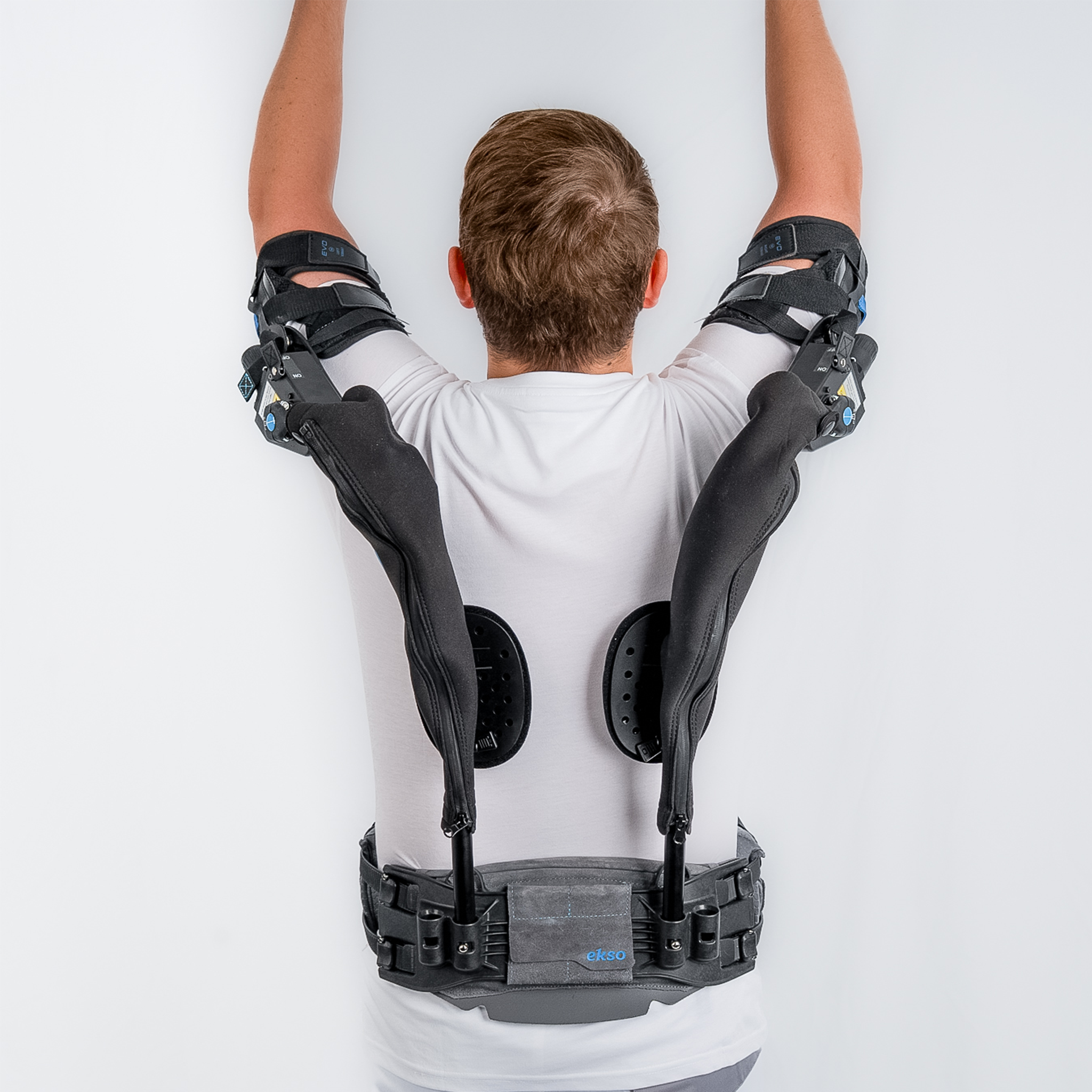
Ekso Evo – Exoskeleton for arms and shoulders during overhead work
The Ekso Evo from Ekso Bionics is a passive exoskeleton specifically designed for activities involving raised arms. It dynamically supports the arms and specifically reduces strain on the shoulders and upper back – precisely where overhead work is particularly demanding.
The system is worn on the upper body and provides mechanical support that partially takes over the weight of the arms. This significantly reduces the static work required by the shoulder and neck muscles, thus reducing fatigue and increasing endurance.
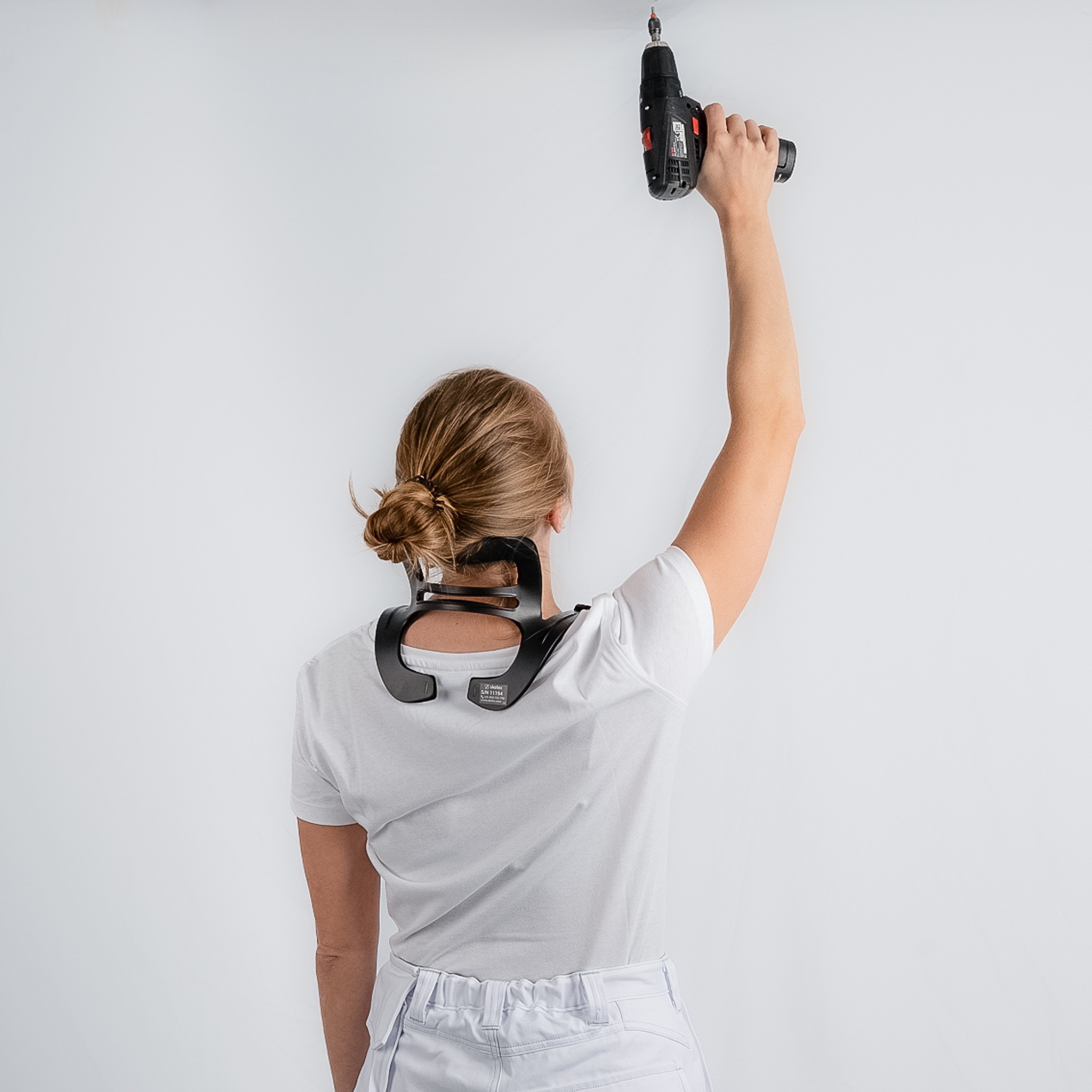
Skelex Neck Support – targeted relief for the neck
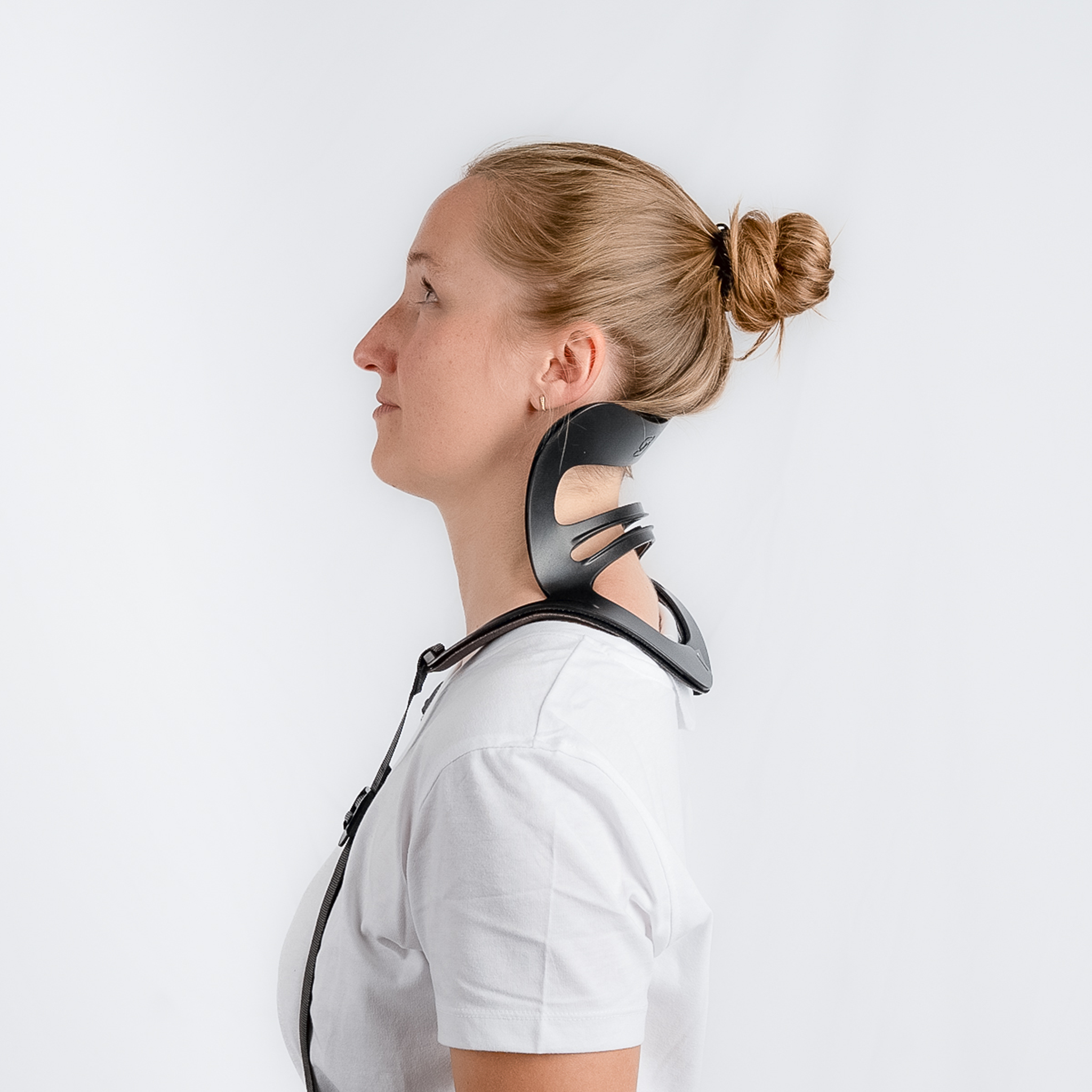
Besides shoulder and arm support, the neck also plays a crucial role in overhead work. The Skelex Neck Support is a specially designed neck support that specifically relieves pressure on the head and cervical spine when the head is tilted backward.
Especially during tasks where the gaze is frequently directed upwards – such as installations, inspections, or ceiling work – the Skelex Neck Support reduces the static strain on the neck muscles. This prevents tension and increases ergonomic comfort during extended periods of use.
Combined use : The Ekso Evo and the Skelex Neck Support can be worn together. This allows for the simultaneous reduction of shoulder, arm, and neck strain – a clear advantage during intensive and prolonged overhead work.
Benefits of exoskeletons for neck and shoulder pain
- Noticeable relief for shoulders and neck during overhead work
- Reduced muscle fatigue and increased physical endurance
- Improved ergonomics in the workplace, even under difficult-to-change working conditions.
- Maintaining freedom of movement without motors or external energy supply
- Prevention of long-term shoulder and neck pain
For which tasks are these solutions suitable?
Exoskeletons like Ekso Evo and Skelex Neck Support are particularly suitable for activities involving regular work above shoulder height, including:
- Assembly and installation work
- Maintenance and servicing
- Industrial and manufacturing jobs
- Manual labor involving work above shoulder height
Conclusion: Effective ergonomics for overhead work
Overhead work isn't always avoidable – but neck and shoulder pain caused by work can be effectively reduced. With ergonomic exoskeletons like the Ekso Evo and the Skelex Neck Support, noonee offers practical support for demanding tasks. The result is less discomfort, increased productivity, and a lasting improvement in workplace ergonomics.
Get in touch with us!
FAQs – Frequently Asked Questions about Exoskeletons for Neck and Shoulders
Are exoskeletons medical aids for overhead work?
No. These are ergonomic assistance systems for prevention and relief in everyday work, not medical products.
Do the Ekso Evo or Skelex Neck Support restrict freedom of movement?
No. Both systems are designed to preserve natural movement patterns.
Can shoulder and neck solutions be combined?
Yes. Depending on the activity, arm, shoulder and neck support can be usefully combined.
Product comparison
Skelex
Nackenstütze
Ekso Bionics
Exo Evo
Skelex
Nackenstütze
Ekso Bionics
Exo Evo