How can exoskeletons support veterinarians in their daily work?
Veterinarians and veterinary professionals are among the occupational groups with particularly high physical demands. Whether in the animal clinic, in equine practice, during house calls, or in livestock medicine: many activities require prolonged standing, working in bent positions, and lifting and holding heavy animals. Exoskeletons can help to specifically reduce physical strain and enable more ergonomic workflows.
The goal is not to change medical procedures. Exoskeletons merely support the physical aspect of the work by relieving specific muscle groups and supporting posture.
Why Veterinarians Particularly Benefit from Exoskeletons
Veterinary medicine places different demands than many traditional medical professions. While human doctors usually work in standardized workplaces, veterinarians often work in changing environments – for example, in stables, riding halls, on farms, or in operating theaters.
In addition, animals do not actively participate in ergonomic workflows. Examinations, treatments, or care measures often have to be performed in unfavorable body postures. Especially with large animals, this results in high strain on the back, legs, shoulders, and neck.
Additionally, the page "Exoskeletons for Doctors and Surgeons" offers a further overview of ergonomic support systems in the medical work environment.
Physical Strain in Veterinary Medicine
Working with Horses and Livestock
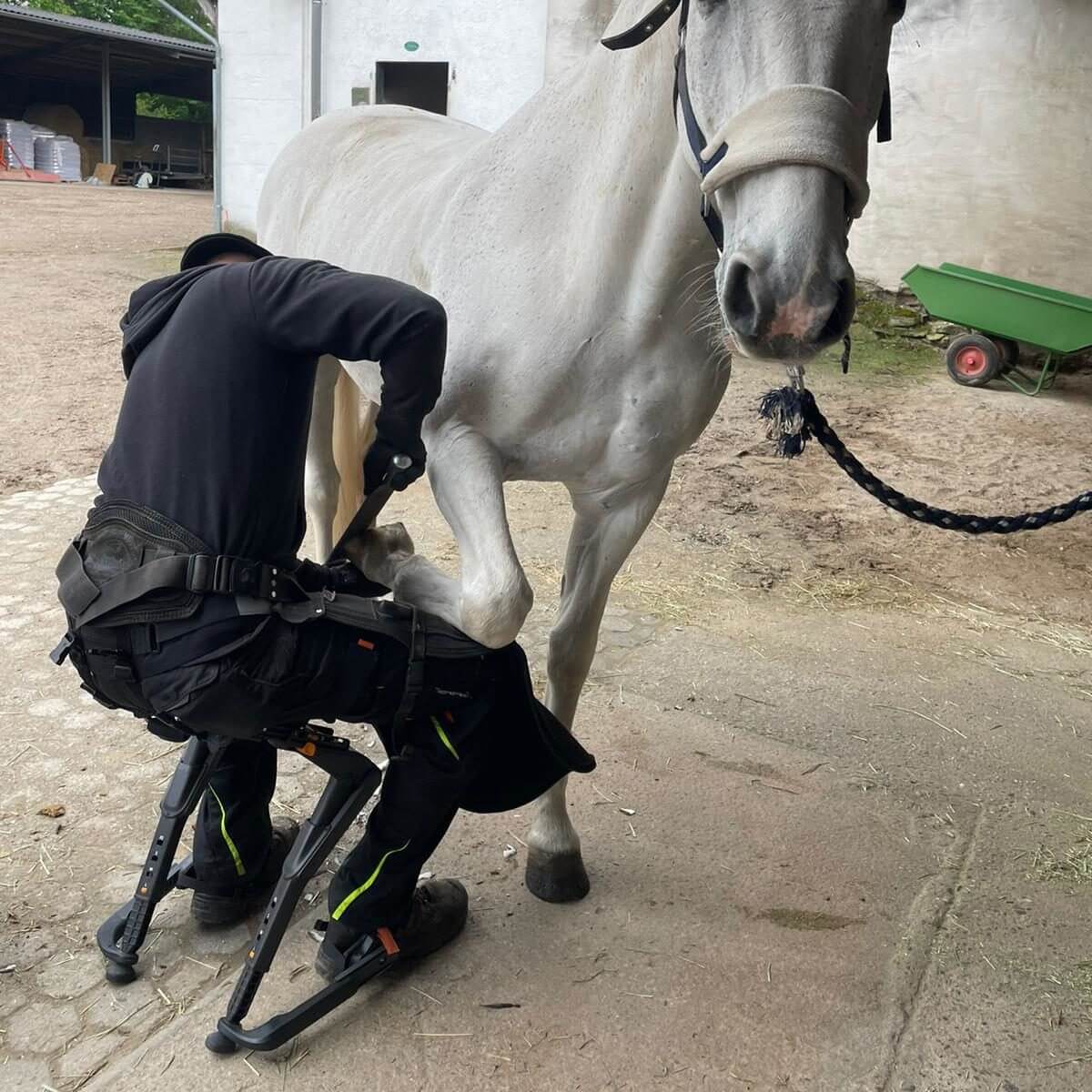
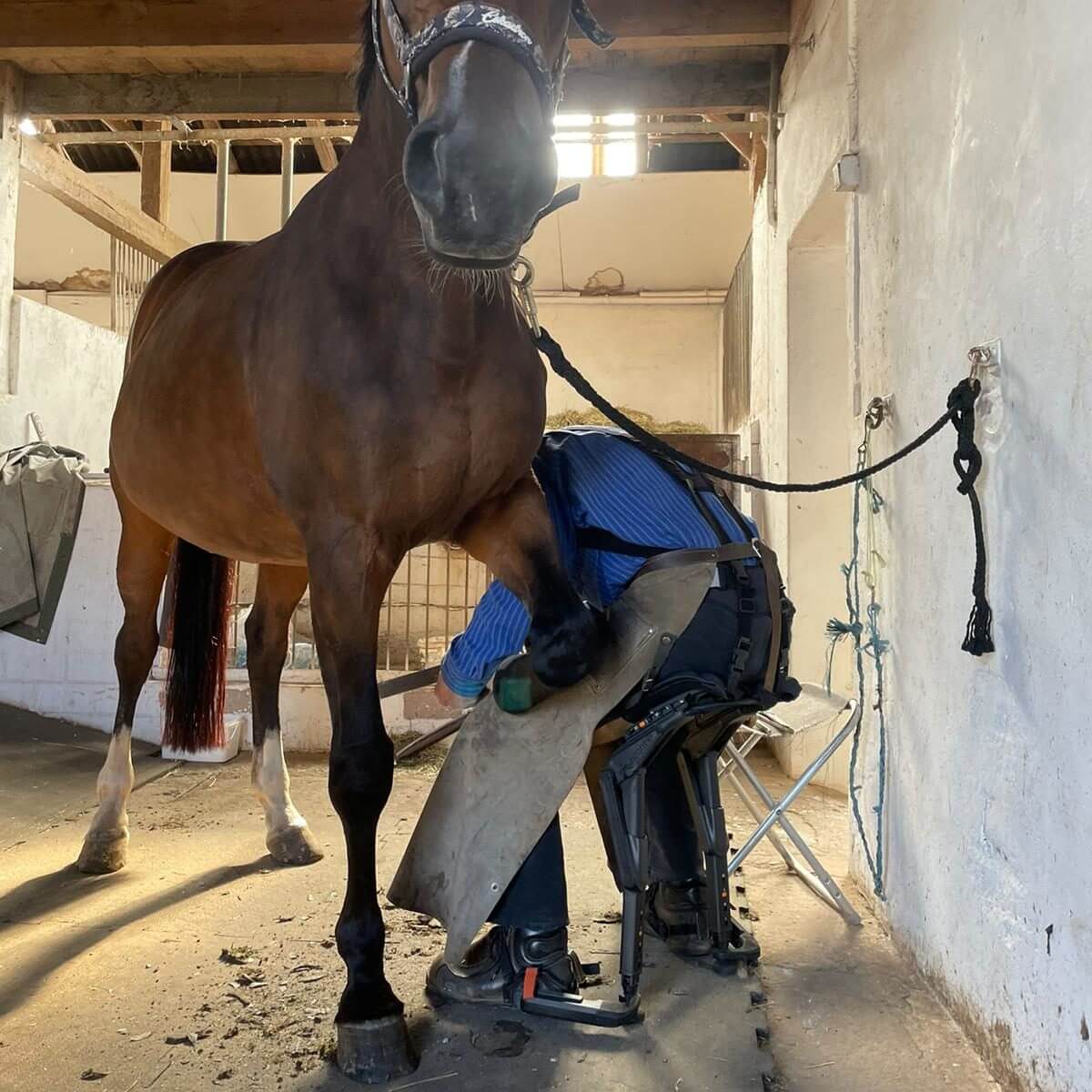
When working with horses, cattle, or other large animals, many tasks involve low or semi-bent working postures. Examining hooves, treating limbs, or performing dental work on horses can require a static posture for extended periods.
These stresses accumulate throughout the workday and can lead to fatigue and increased strain on the musculoskeletal system.
Lifting and Repositioning Heavy Dogs
Significant physical strain also occurs in small animal clinics. Large dogs often have to be lifted onto examination tables, positioned for
diagnostic procedures, or stabilized during treatments.
Considerable forces act on the back and core muscles. Especially with recurring lifting, ergonomic support can be beneficial.
Long periods of standing and static postures
Besides lifting and carrying, prolonged standing is one of the most common stressors in everyday veterinary medicine. Surgeries, dental treatments, hoof trimming, or extensive examinations can last several hours. The resulting static muscle work particularly strains the legs, back, and shoulder area.
Which exoskeleton is suitable for which task?
Not every exoskeleton is designed for the same tasks. The selection should always be based on the actual stresses and strains.
Chairless Chair for Equine Dentists and Large Animal Medicine
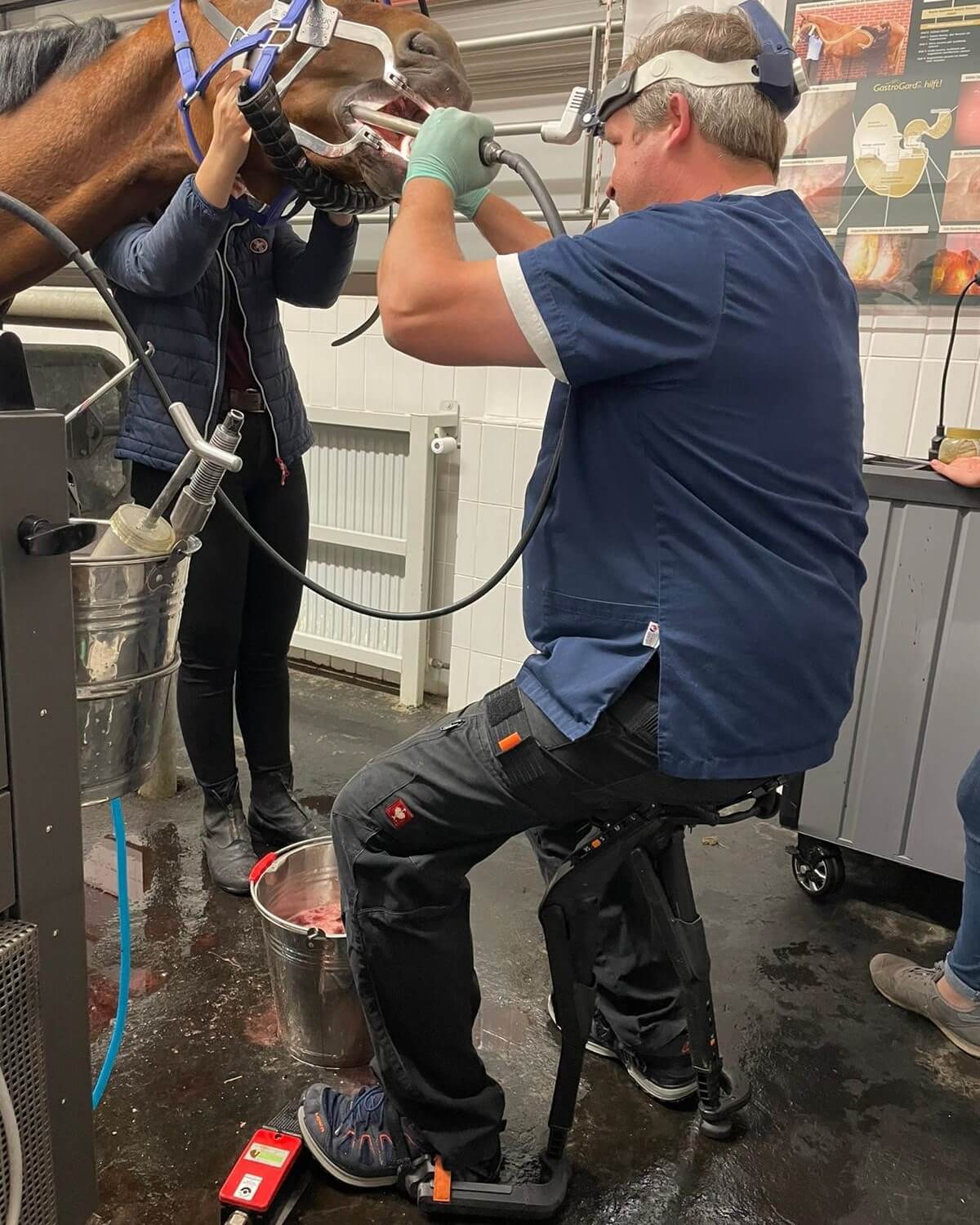
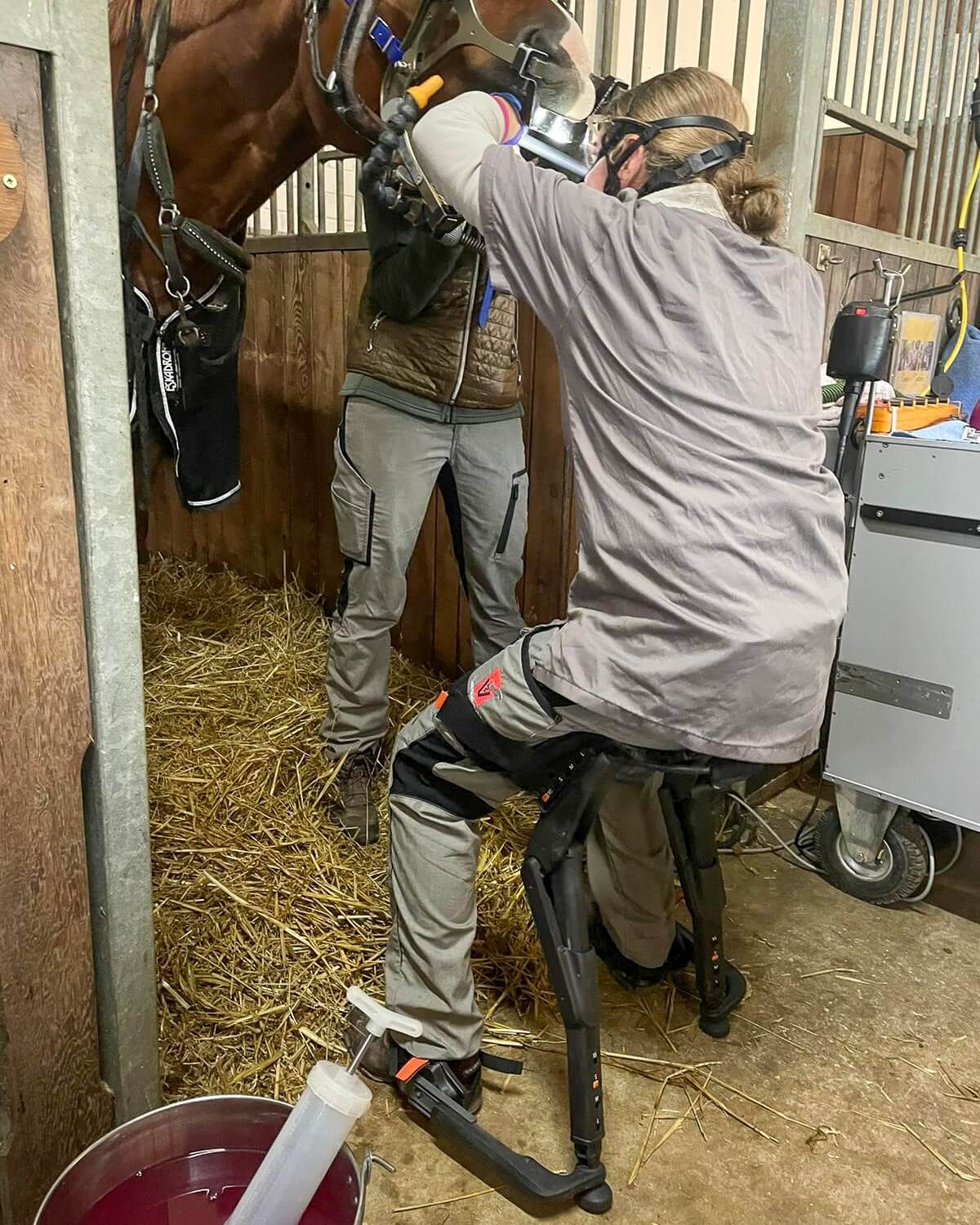
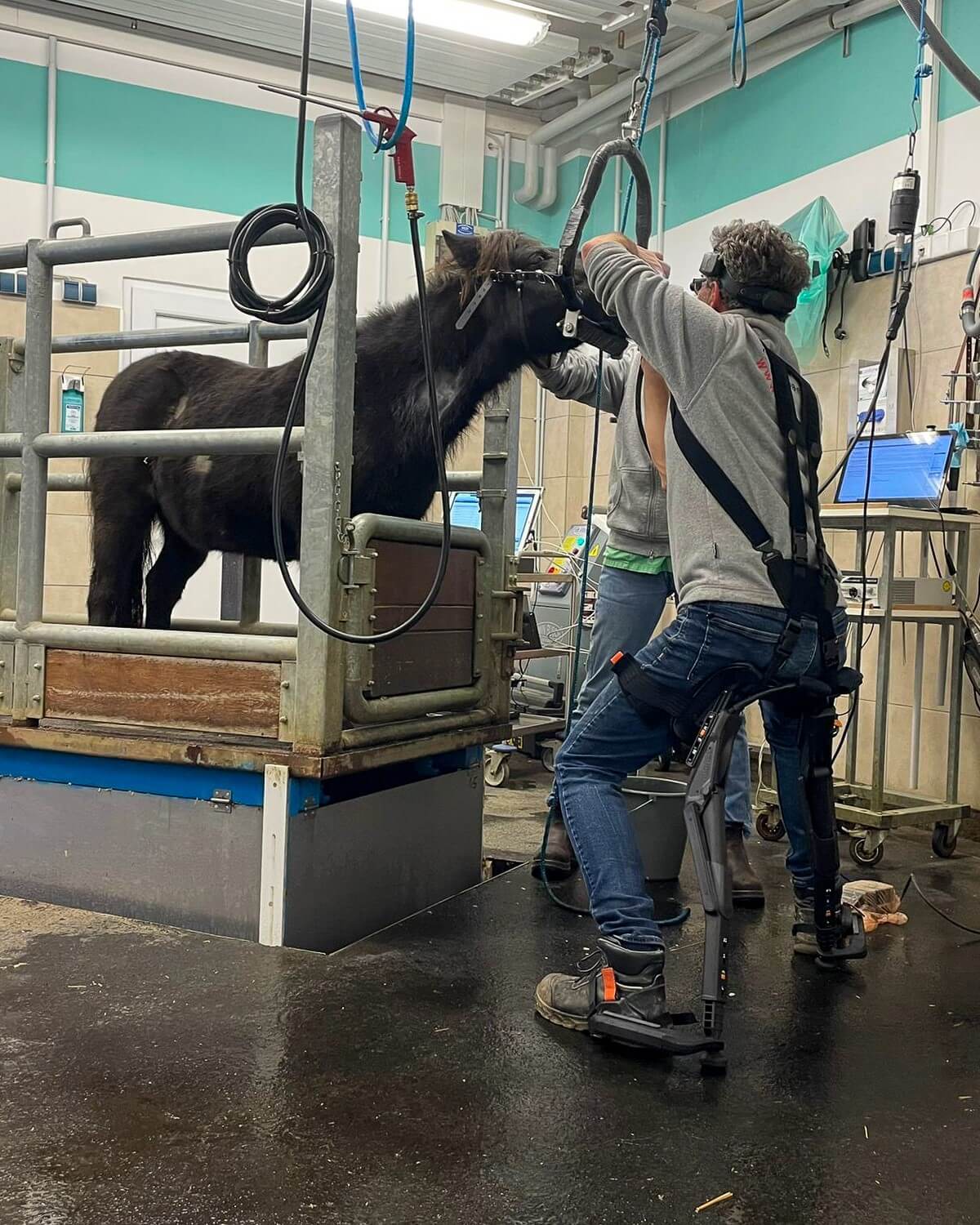
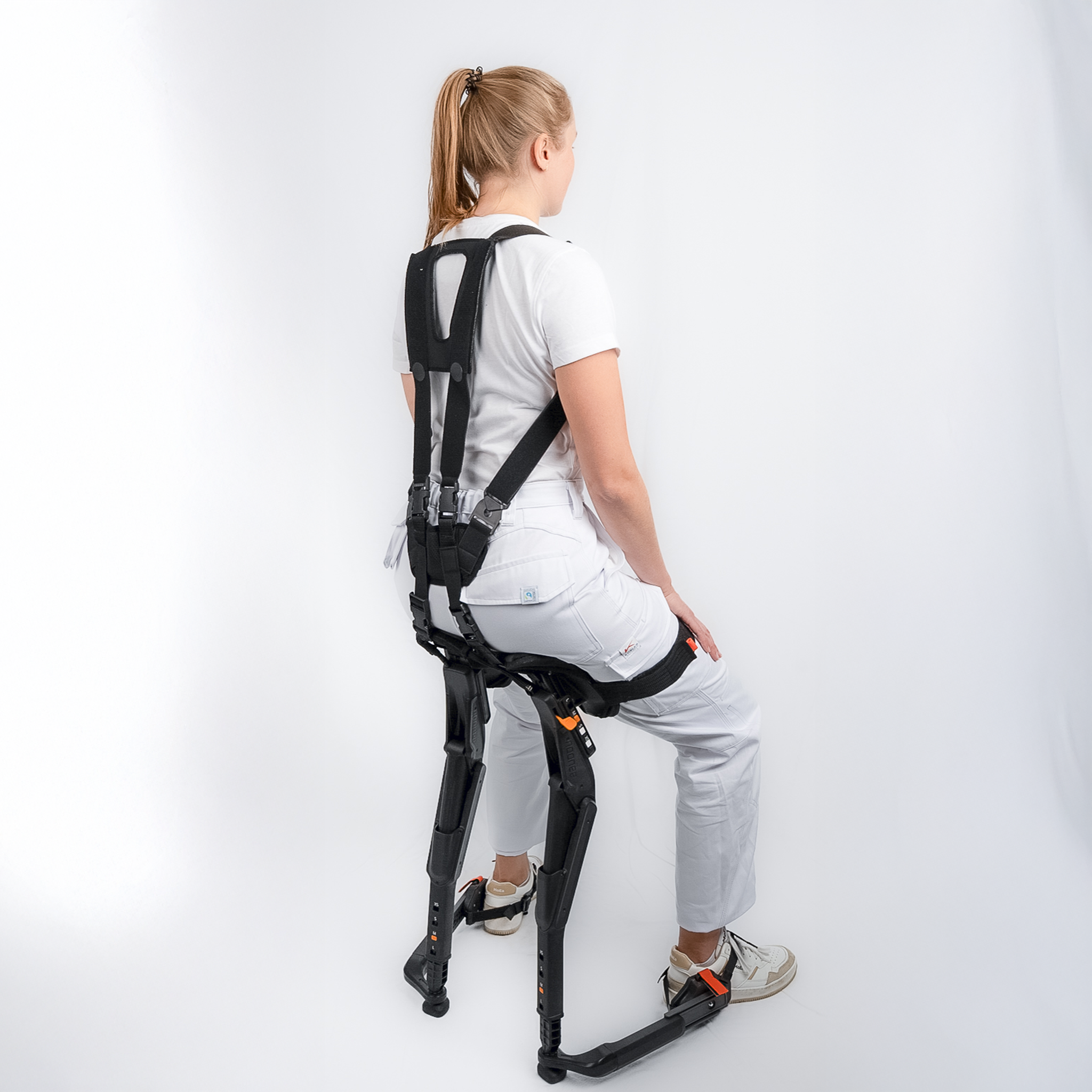
The Chairless Chair is particularly suitable for activities involving long periods of standing and frequent changes between standing, walking, and working in low positions.
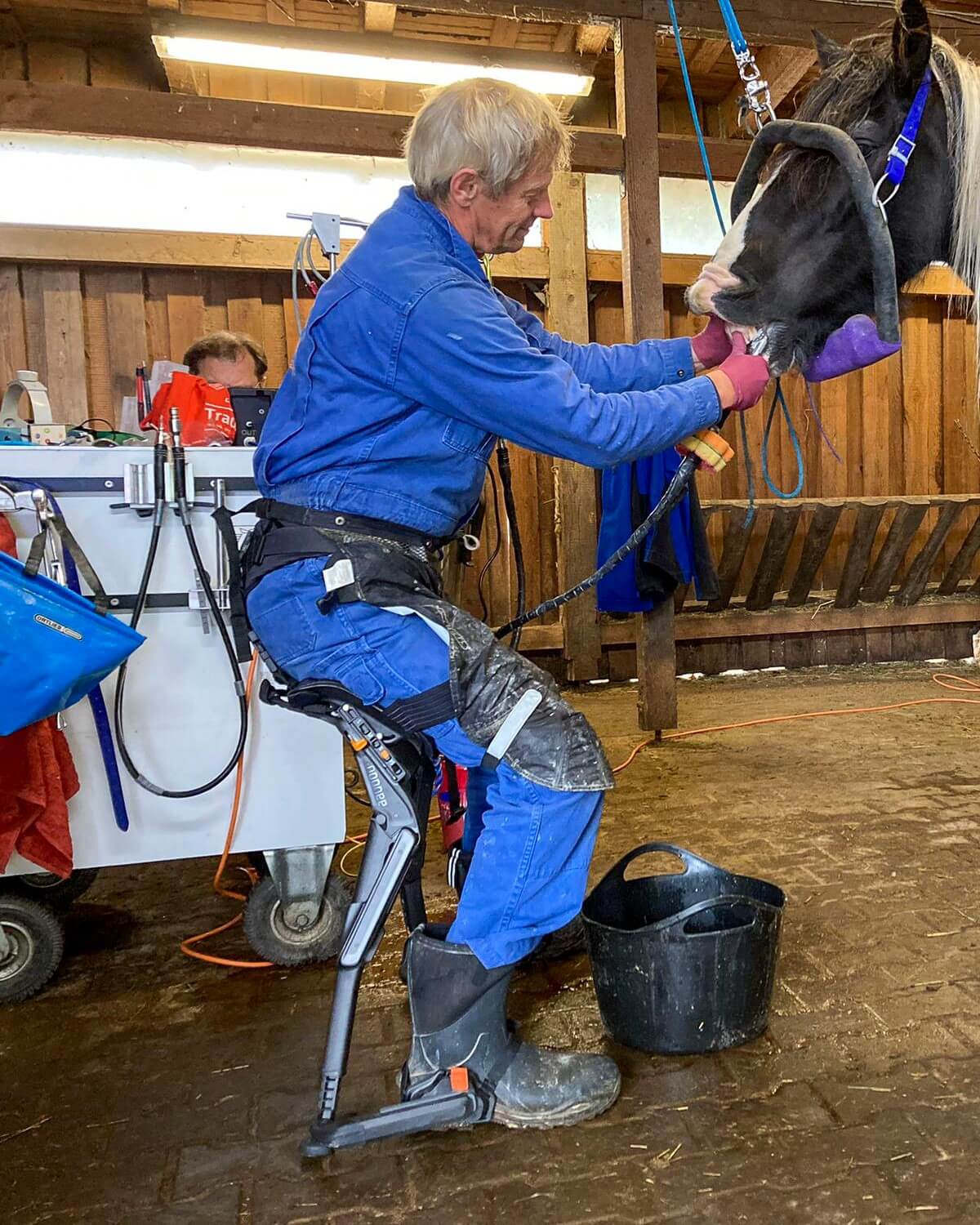
Equine dentists, for example, benefit from being able to adopt a stable, seated-like position when working on a horse's mouth, without having to carry a stool or other seating aid. The Chairless Chair can also enable a more ergonomic working posture during examinations and treatments of the hooves.
Since the system is worn directly on the body, mobility is maintained, and no additional obstacles are created in the work environment.
BionicBack for Lifting and Carrying Tasks
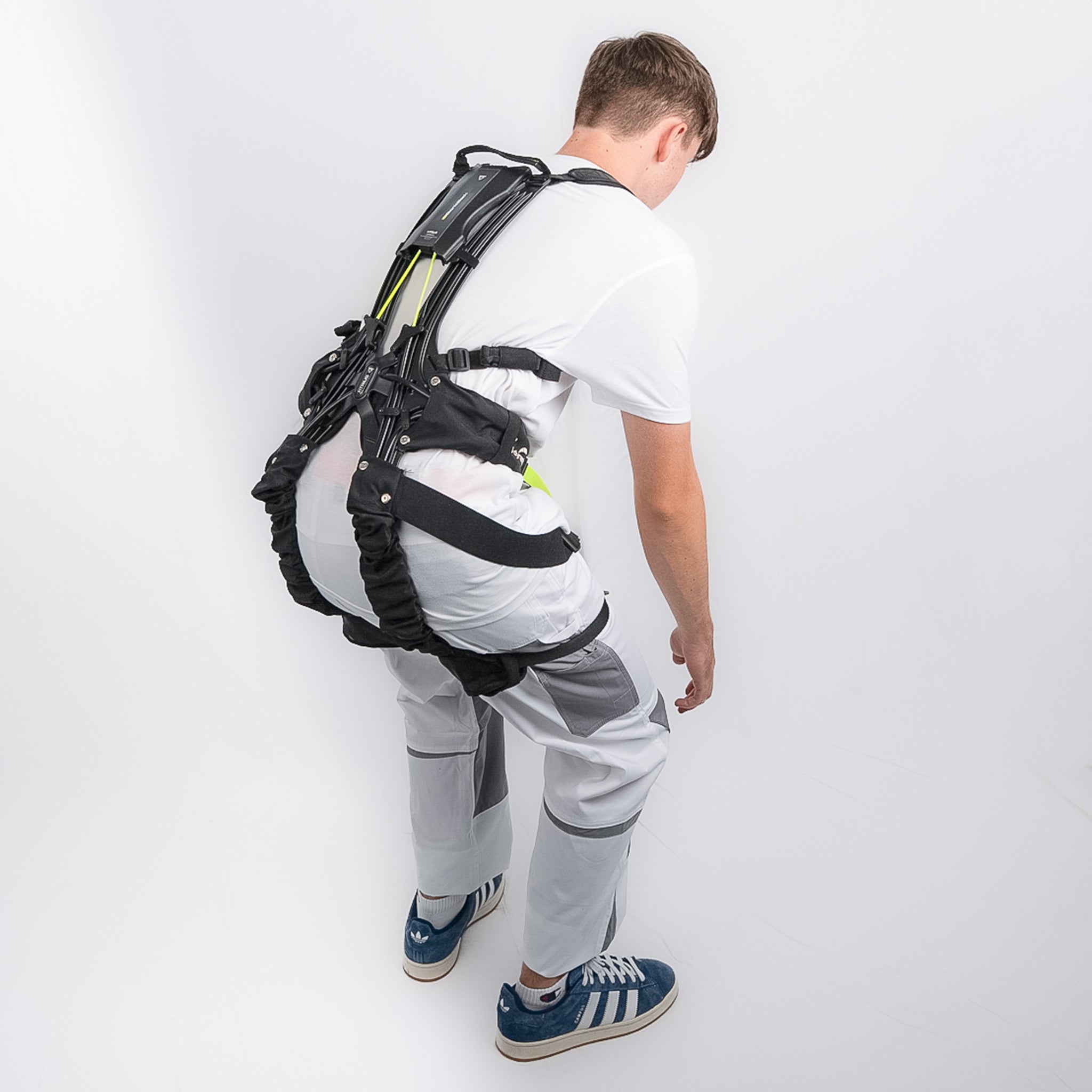
If heavy dogs or other animals need to be regularly lifted, moved, or held, back exoskeletons like the BionicBack can be a useful aid.
These systems are designed to reduce strain during lifting movements and when working in bent-over postures. This specifically supports the back and torso muscles during physically demanding activities.
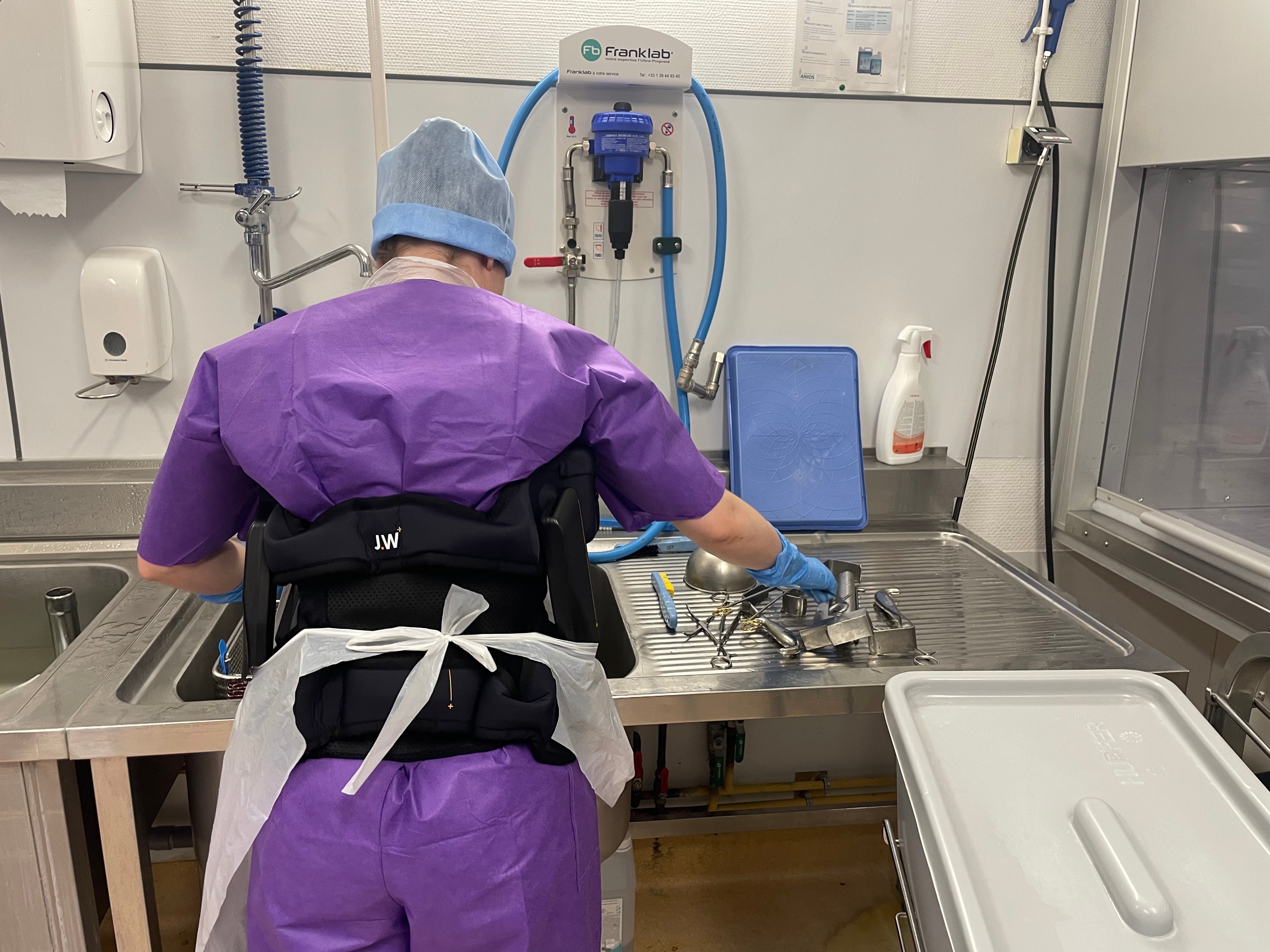
Further exoskeletons for back, shoulders and legs
In addition to Chairless Chair and BionicBack, other systems may also be suitable depending on the activity – for example, for targeted support of the shoulders or arms.
The deciding factor is which movements are particularly frequent or particularly strenuous in everyday work.
Areas of Application and Benefits
Typical applications in veterinary medicine
Exoskeletons can be used, among other things, in:
- Equine dentistry
- Equine treatment and care
- Hoof examinations and treatments
- Large animal medicine
- Farm animal medicine
- Veterinary clinics
- Small animal practices
- Repositioning heavy dogs
- Diagnostics and treatments with long standing times
- Mobile veterinary services
Benefits of Exoskeletons for Veterinarians
Depending on the activity and the type of exoskeleton, various benefits can arise:
- Support for long periods of standing
- Relief from bent working postures
- More ergonomic working conditions
- Assistance with lifting and carrying operations
- Maintenance of freedom of movement during work
- Integration into existing workflows without major conversion efforts
It is important to note that exoskeletons do not replace medical treatment. They serve exclusively for ergonomic support in physically demanding activities.
Finding the Right Exoskeleton for Your Practice
Every veterinary activity places different demands on ergonomics and freedom of movement. While equine dentists often benefit from a Chairless Chair, animal clinics often focus on lifting operations and back strain.
Therefore, the selection of an exoskeleton should always be based on the actual work processes. On the noonee exoskeleton marketplace, you will find various solutions for the back, legs, shoulders, and arms, as well as support in choosing the right system for your area of application.
In addition, there is the possibility to test exoskeletons in a test phase directly in your own work environment. This makes it easier to assess which system fits the specific activities, movement sequences, and requirements in practice.
Get in touch with us!
Chairless Chair in use