
Chairless Chair
$2,706.00
Shipping calculated at checkout.
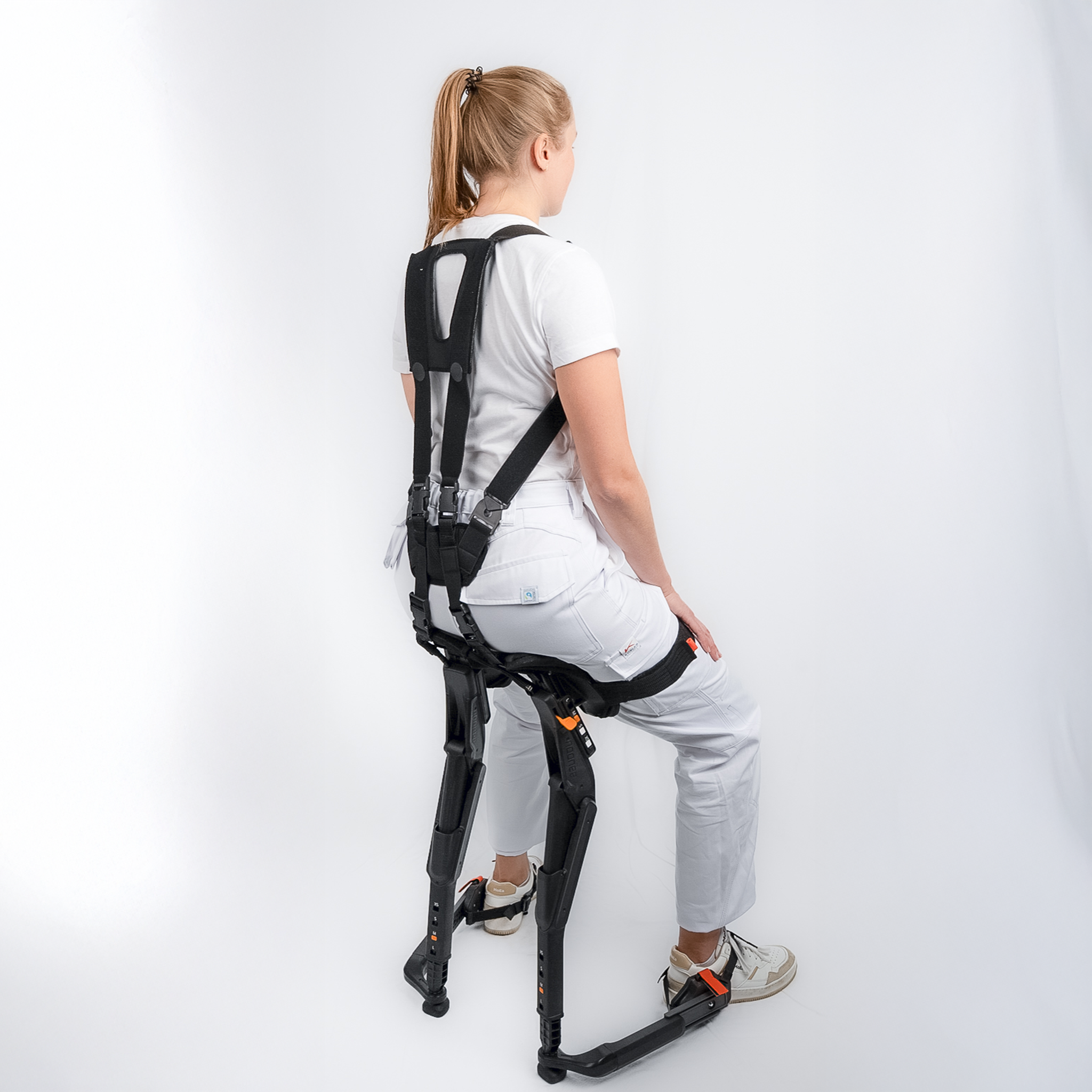
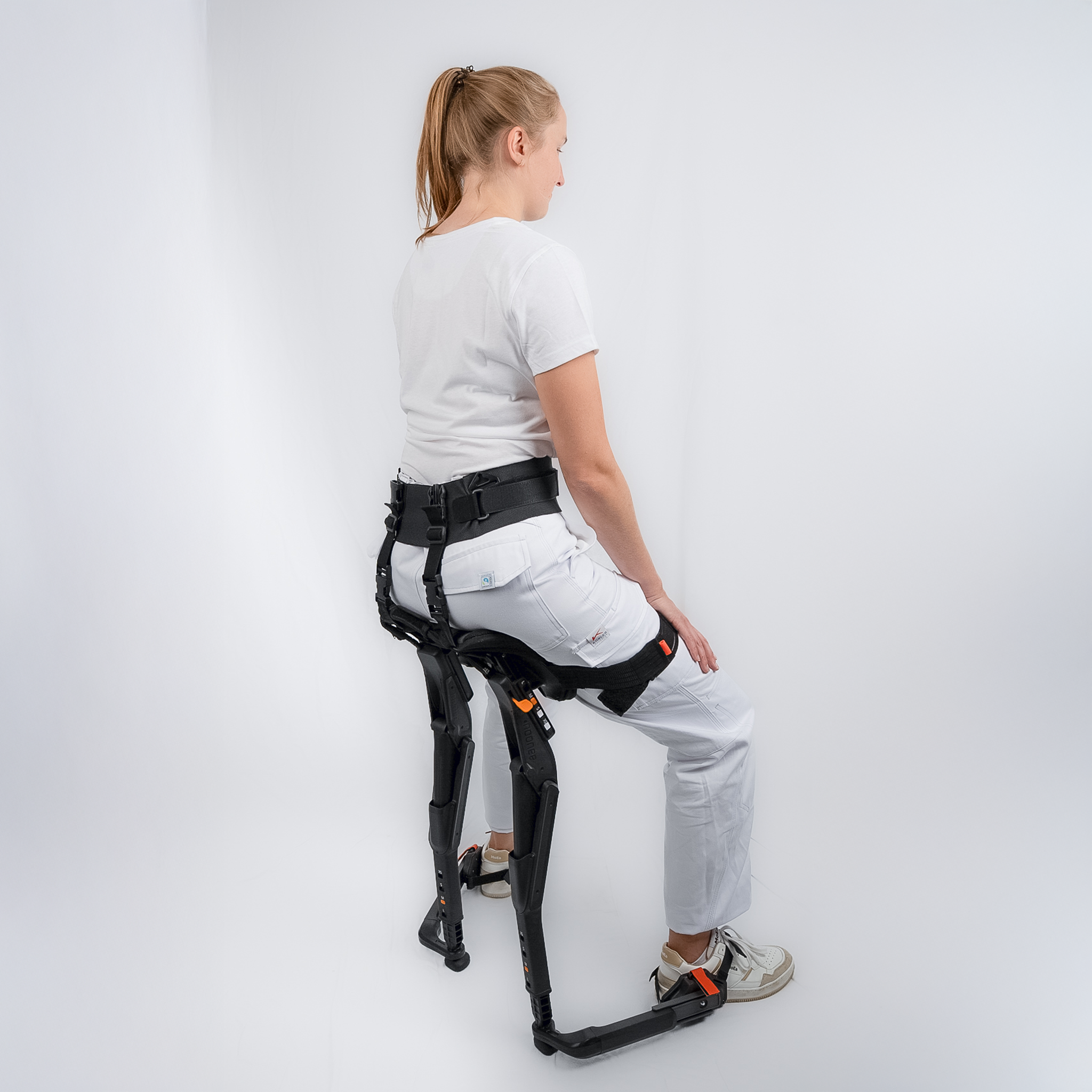
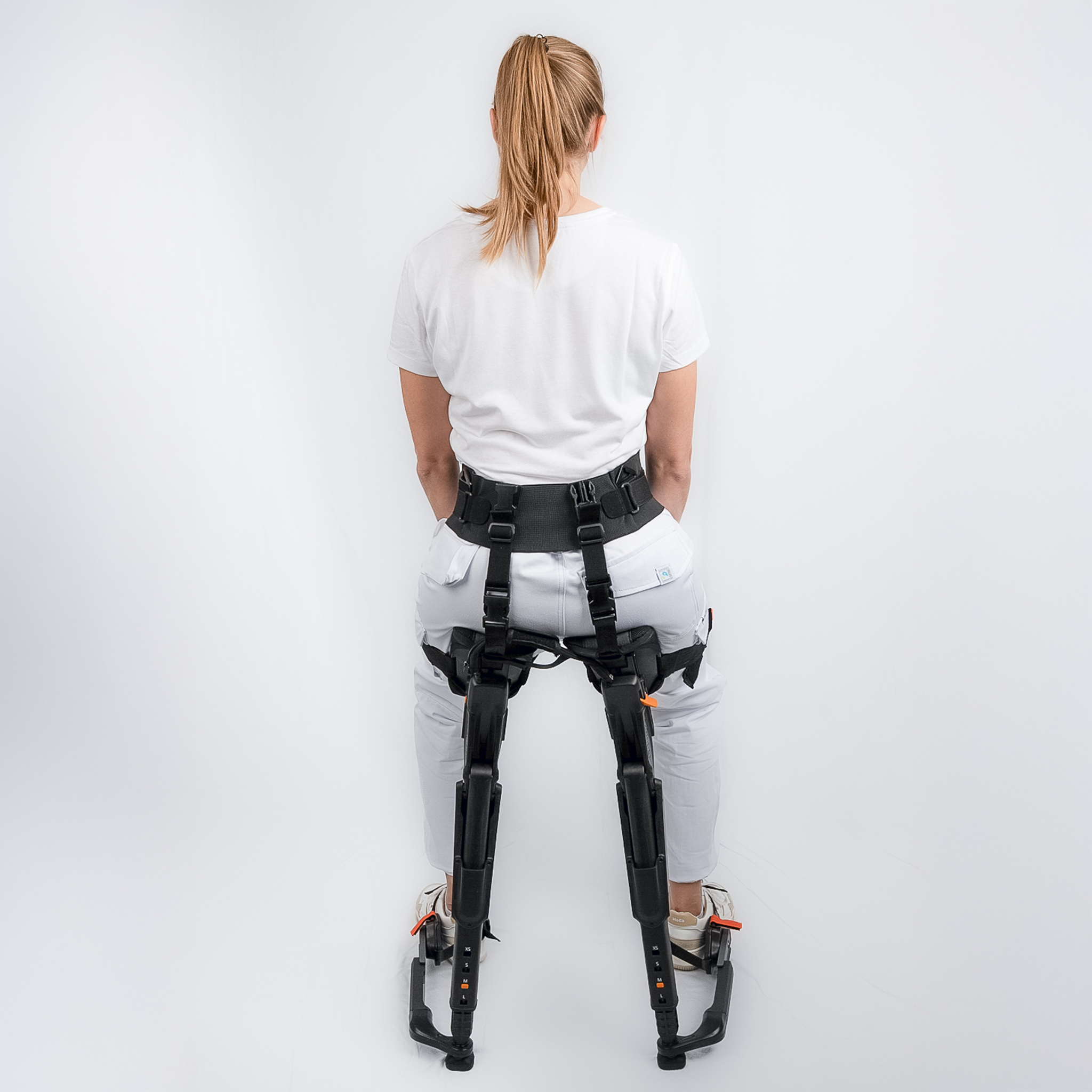
The Exoskeleton for Back & Legs
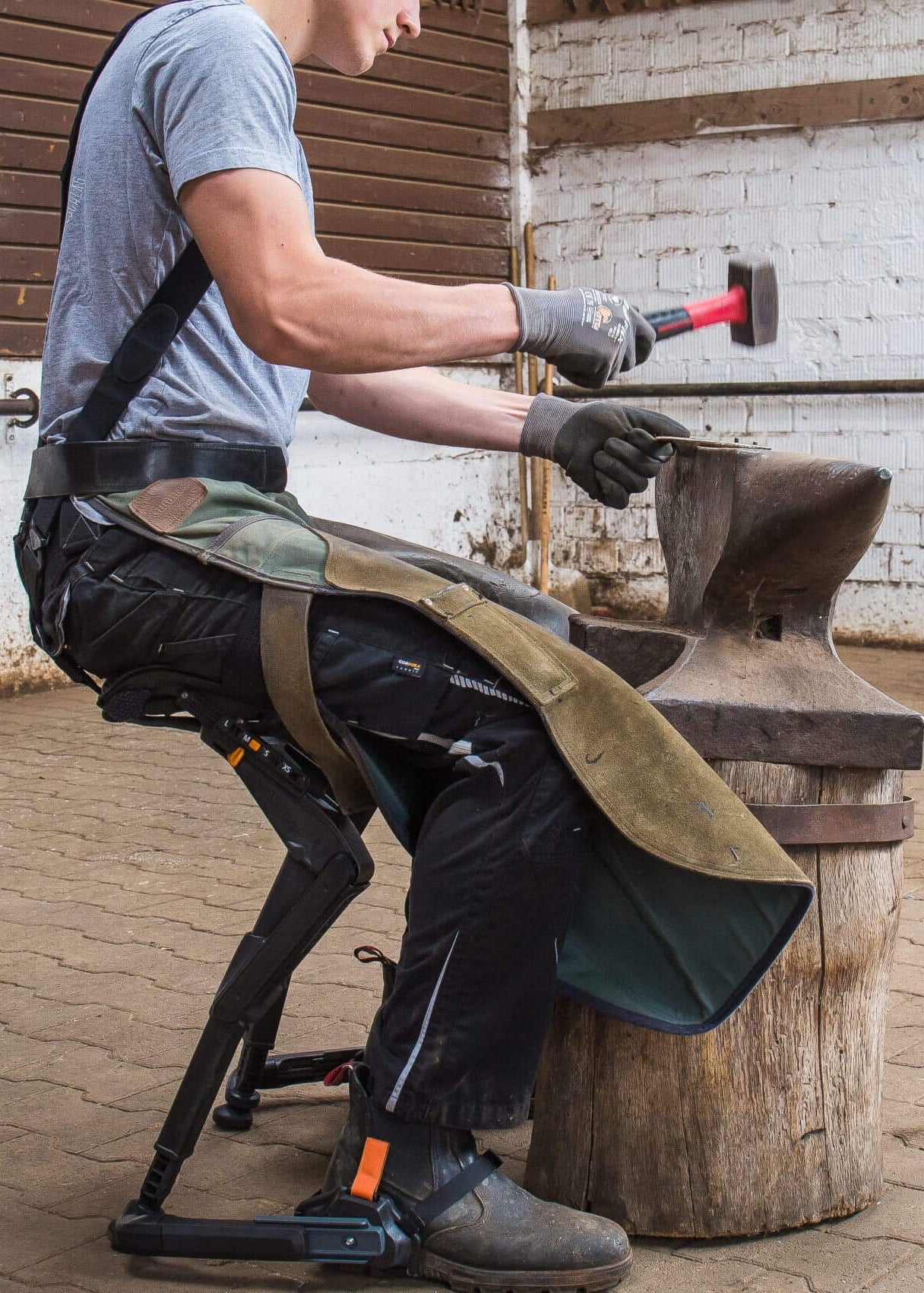
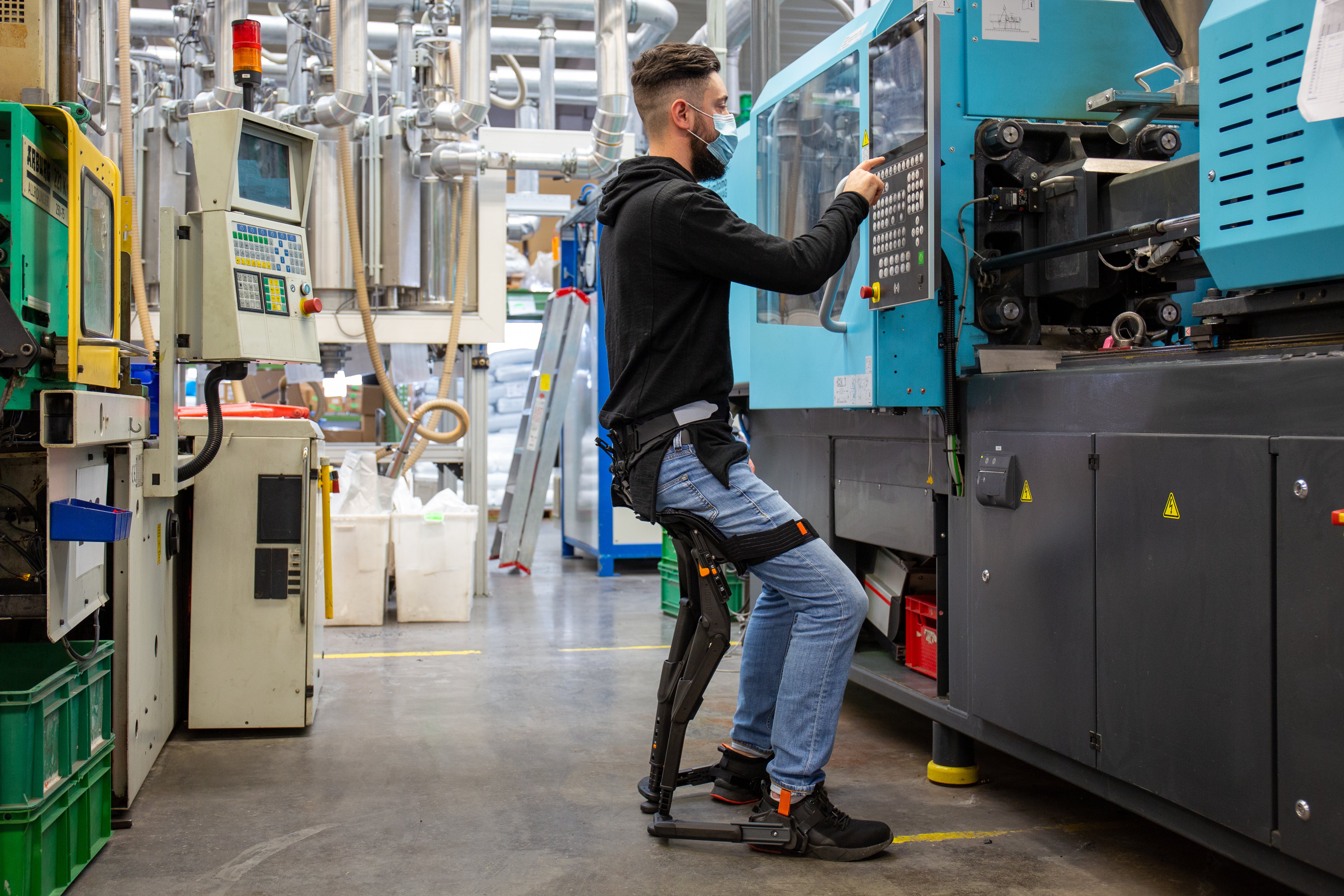
A passive leg exoskeleton from noonee – developed for people who stand for several hours daily. The exoskeleton offers you a flexible sitting and relief position directly on the body – ideal when long periods of standing strain the back or legs. The passive exoskeleton reduces pressure on the spine and joints, supports an upright posture, and ensures noticeably less fatigue during the workday. Developed for professional use and private use.
Your advantages at a glance
- Back relief: Reduces pressure on the spine and intervertebral discs.
- Joint protection: Relieves knees, hips, and ankles during long periods of standing.
- Less fatigue: More energy and concentration throughout the workday.
- Passive: No battery, no motor – reliable and lightweight (only 3.6 kg).
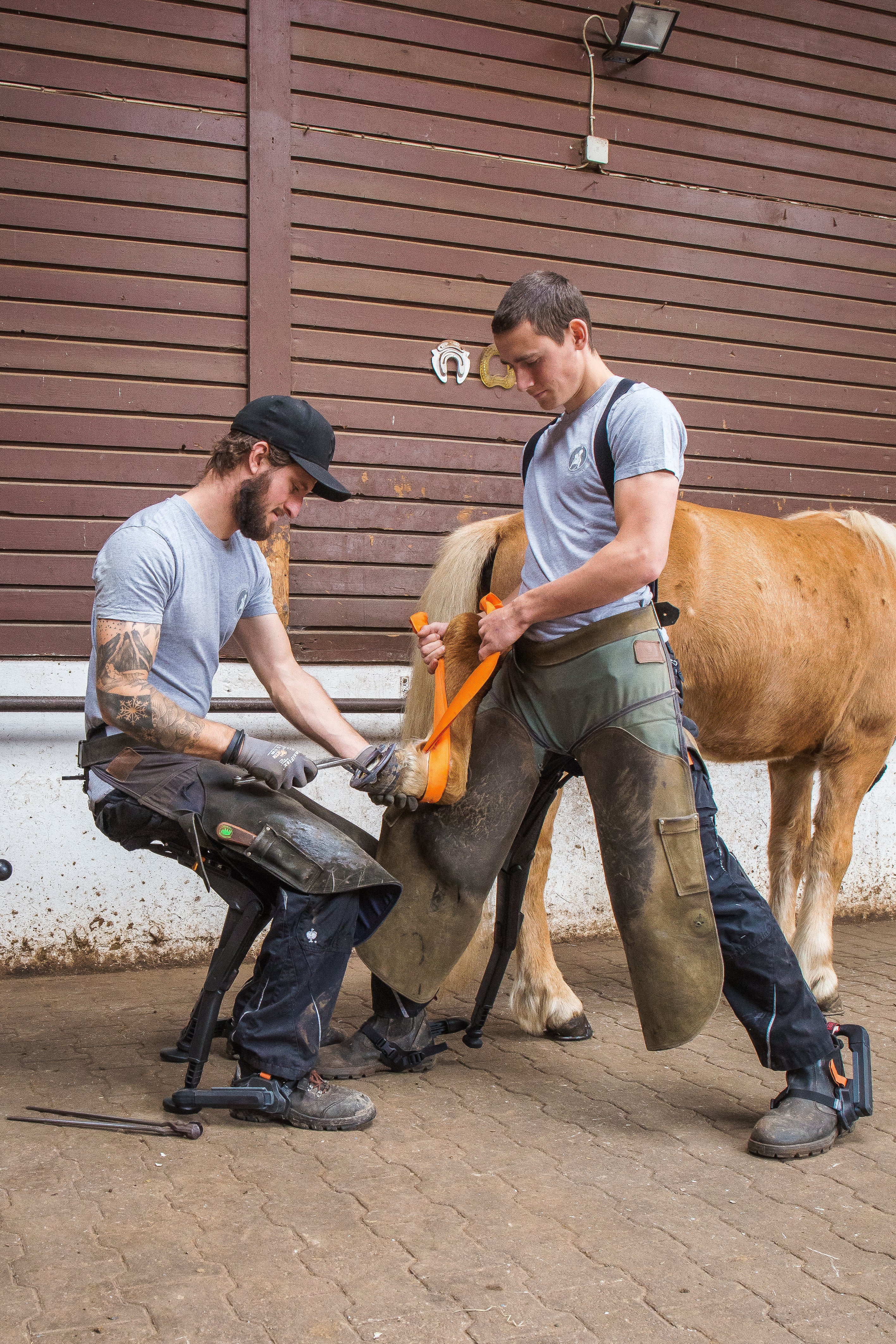
- Flexible use: For industry, trade, medicine, and private use.
Technical Details
- Weight: 3.6 kg
- Type: Passive leg exoskeleton
- Manufacturer: Carl Stahl GmbH
- Area of application: Industrial & private
- Adjustable: Yes, individually adaptable
Buy your exoskeleton now and permanently protect your back, knees, and joints – directly from noonee, your specialist for ergonomic exoskeletons.
In stock, ready to ship
Matching accessories
Activity
Assessment
Limitations / Notes
Activity
Sit-stand tasks without long walking distances
Assessment
Excellent FIT
The Chairless Chair is designed exactly for alternating between standing, active sitting, and short position changes.
Limitations / Notes
Ensure proper fitting and correct seat height adjustment before use.
Activity
Assembly at fixed workstations
Assessment
Excellent FIT
Relieves legs, knees, and back during repetitive tasks in similar positions.
Limitations / Notes
Not ideal when long walking distances are involved.
Activity
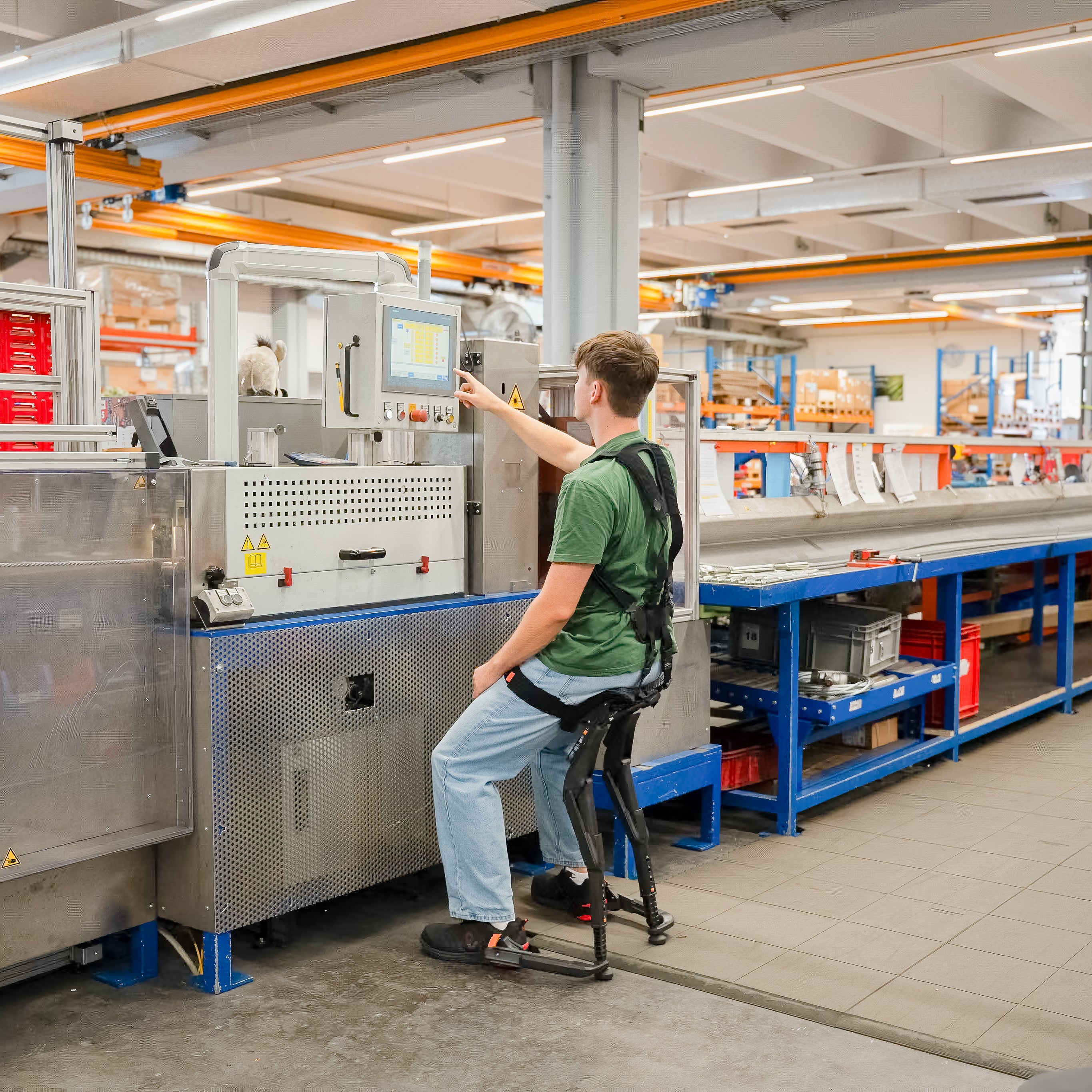
Machine operation and quality control
Assessment
Good FIT
Useful when employees stand for long periods but should be able to sit briefly at regular intervals.
Limitations / Notes
Work area should be level and step-free.
Activity
Order picking with short distances
Assessment
Conditionally suitable
Can help when the task is mostly stationary or within small zones.
Limitations / Notes
Not a suitable fit when long walking distances or frequent stair climbing are involved.
Activity
Overhead work
Assessment
No FIT
The system relieves legs and back in near-seated positions, but not arms, shoulders, or neck.
Limitations / Notes
For overhead work, consider other exos such as Ekso Evo or supplementary Neck Support.
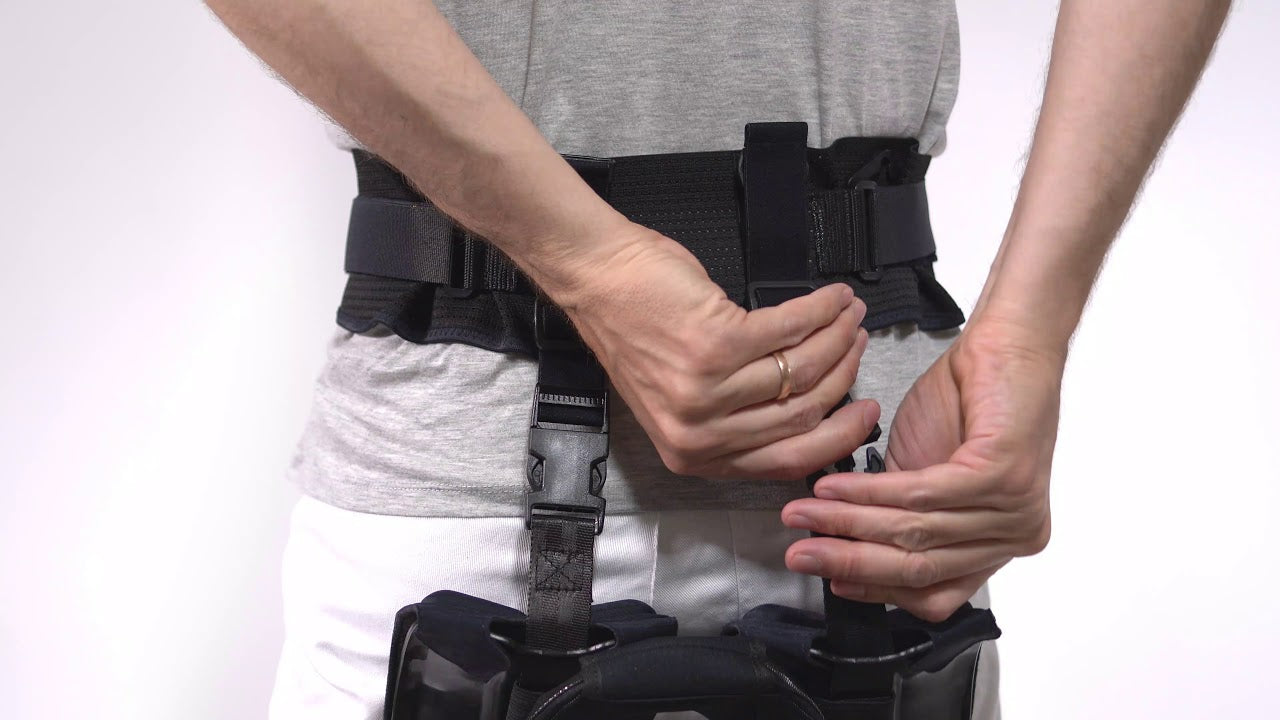
Video instructions for the Chairless Chair
This video will guide you step-by-step through the correct positioning and adjustment of the Chairless Chair 2.0.
Learn how to optimally adapt the exoskeleton to your height and working position – for even weight distribution and the best possible ergonomic relief.
FAQ about the Chairless Chair
Visit our FAQs page to learn more.
Which exoskeleton is suitable for which body size?
The Chairless Chair is available in one size. The exoskeleton can be worn by people between 150 and 200 cm tall and weighing a maximum of 120 kg. A separate textile set for the Chairless Chair is also available in one size. Upon request, the textile set can also be purchased in size XS.
Why buy an exoskeleton?
Purchasing an exoskeleton is worthwhile if employees regularly work in strenuous positions – such as standing, squatting, or bending over. The exoskeleton reduces physical strain, supports ergonomically correct posture, and improves workplace safety.
How does an exoskeleton support the back and legs?
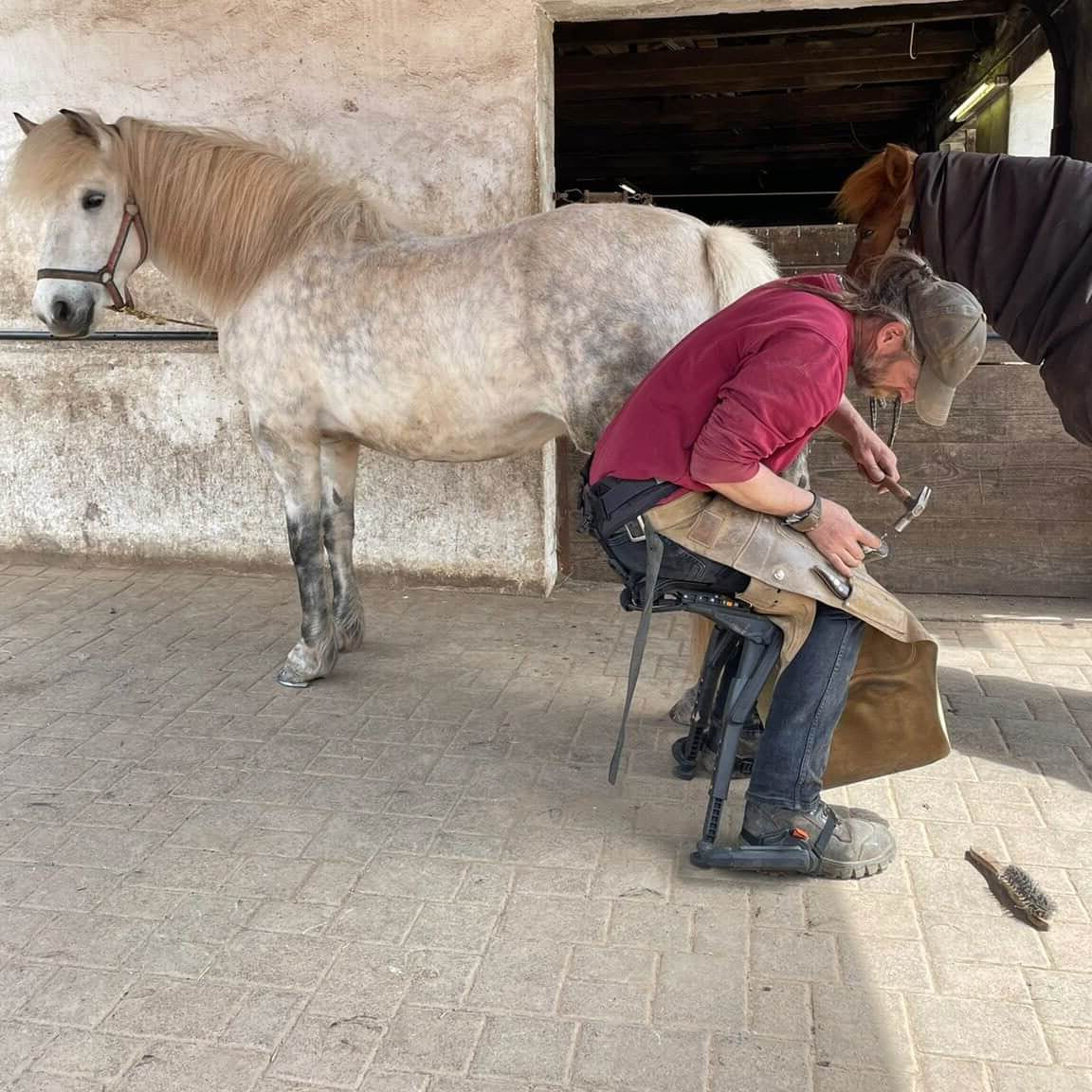
The Chairless Chair relieves the lower back and leg muscles by transferring body weight into an ergonomic sitting position. This reduces pressure on intervertebral discs, joints, and muscles, and prevents typical discomfort associated with standing work.
How does the Chairless Chair support the requirements of DIN EN ISO 9241?
DIN EN ISO 9241 defines ergonomic principles for workplaces. The Chairless Chair helps support these requirements by promoting an ergonomically sound posture, reducing static strain while standing, and enabling regular breaks in posture. It can thus be a valuable addition to companies' ergonomic initiatives and the prevention of muscular strain.
What do I need to consider when conducting a risk assessment for an exoskeleton?
As part of the risk assessment, we examine the physical strain present and how an exoskeleton can be effectively integrated. We support companies with the ergonomic evaluation, selection of the appropriate model, and documentation in accordance with legal requirements.
Get in touch with us!
Do you have any questions about this exoskeleton? Would you like to test it or do you need individual advice? Contact us via the form – our team will respond quickly and competently.