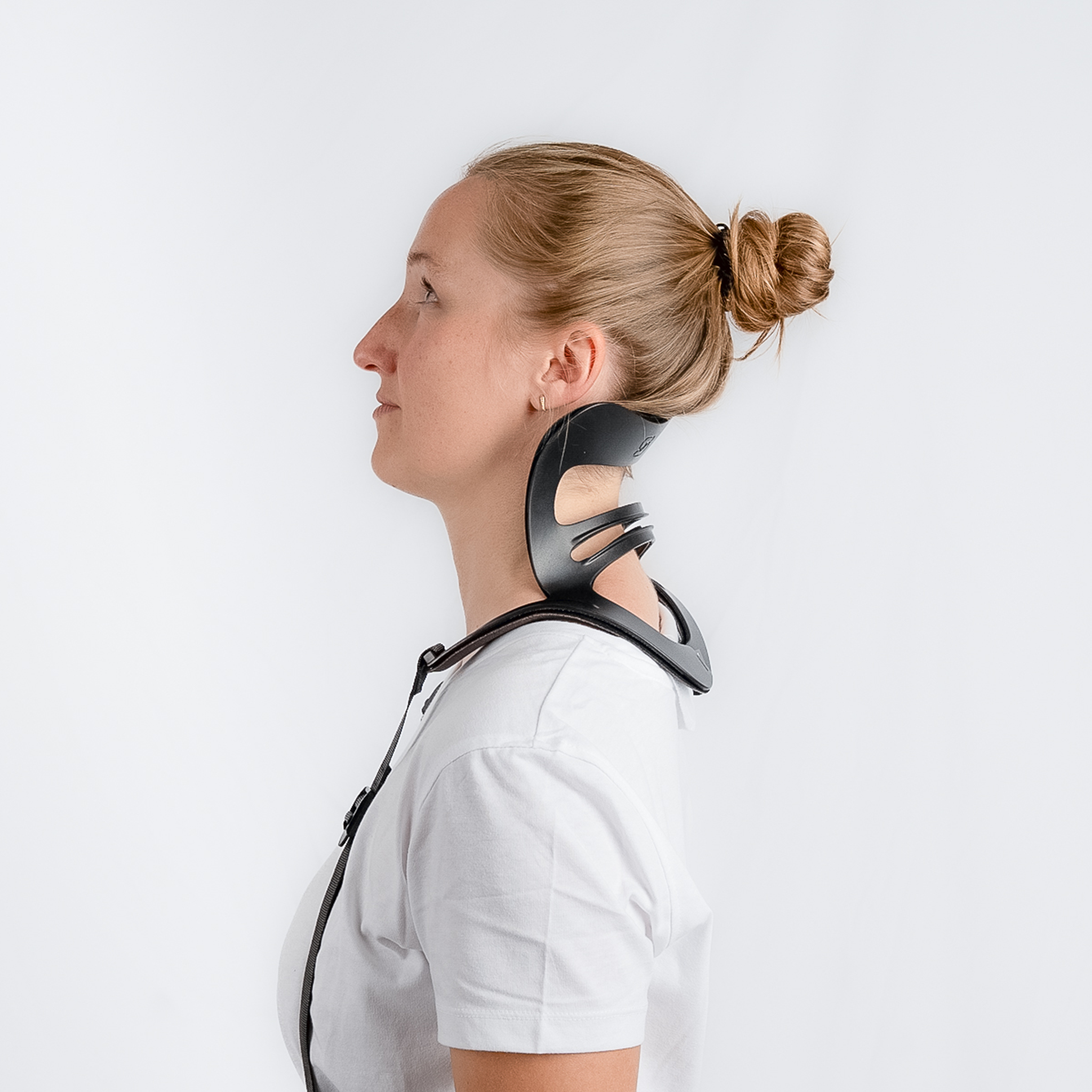
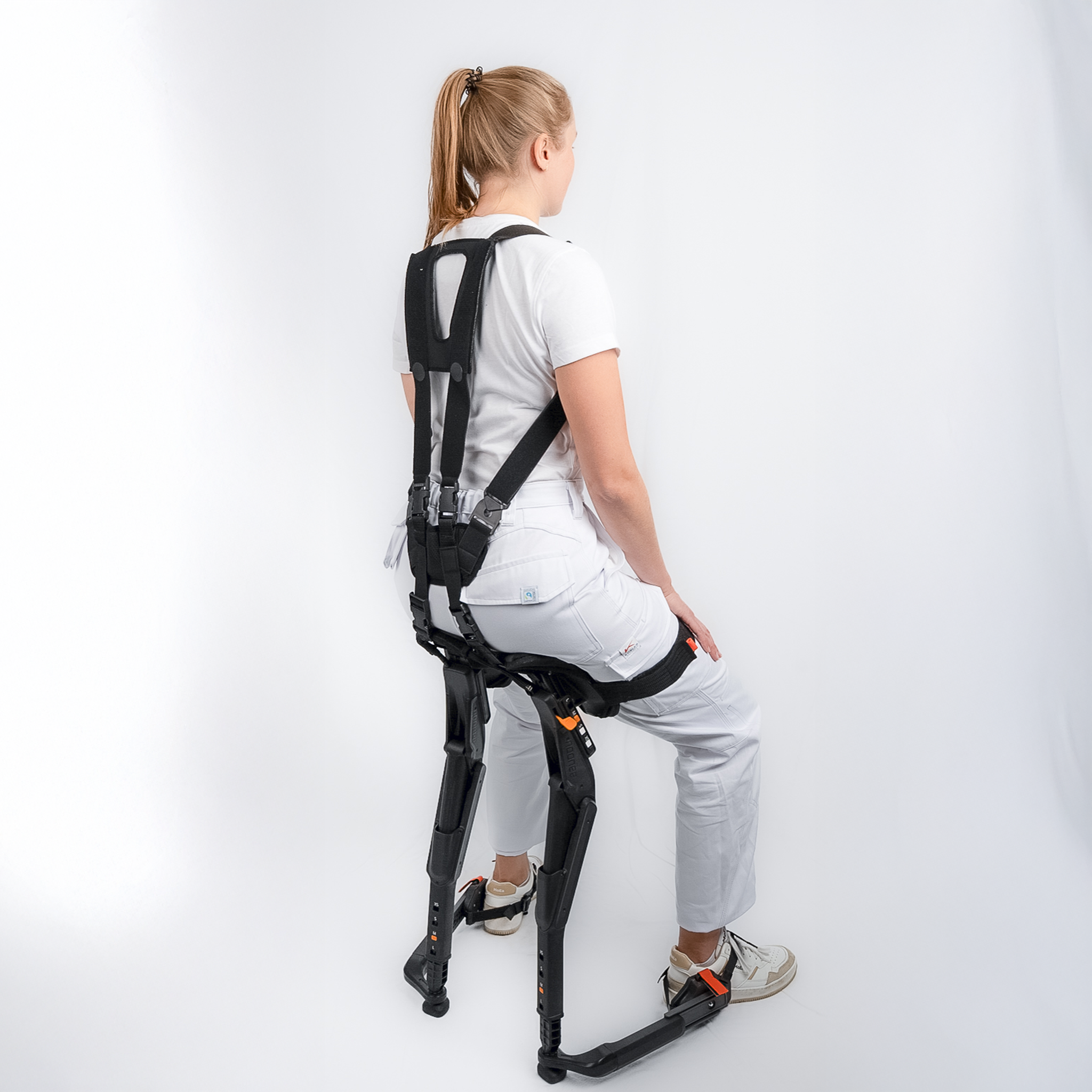
Exoskeletons for the food industry
In the food industry and catering sector, physically demanding tasks remain a part of everyday life, despite modern production and logistics processes. Exoskeletons can effectively support employees during certain tasks. However, they are not a panacea and are not suitable for every workplace.
That is why, at noonee, we provide advice that is deliberately open and honest. We do not just talk about the advantages of exoskeletons, but also about costs, team acceptance, hygiene requirements, potential limitations, and technical alternatives. Because our goal is not a sale at any price, but a sustainable ergonomic improvement of the workplace.
Whether the use of exoskeletons is sensible does not depend solely on the industry or job title. Decisive factors are the specific movement sequence, the work environment, the duration and frequency of the strain, and the necessary freedom of movement. Especially in the food industry, hygiene, cleanability, temperature, humidity, and the combination with work and protective clothing must also be checked. But don't worry, exoskeletons are definitely an option in the food industry.
Where do physical strains occur?
The food industry encompasses significantly more than farms, supermarkets, restaurants, or commercial kitchens. The sector includes, among other things, food manufacturing and processing, beverage production, bakeries, meat and fish processing, dairies, fruit and vegetable processing, packaging operations, as well as refrigeration, storage, and distribution processes.

Warehousing, order picking and food logistics
A large part of the physical strain in the food industry arises not only in production, but also in storage and logistics processes. These include goods receipt, storing and retrieving products, order picking, and packaging and shipping work. Employees in central warehouses, distribution centers, and cold storage facilities of food manufacturers, wholesalers, and supermarket chains are also part of this environment.
Typical activities include loading and unloading vehicles, moving boxes, crates, sacks, or containers, stacking and destacking goods, and assembling customer orders. In the process, walking, bending, twisting, reaching, lifting, and setting down often alternate over many hours. Especially with repetitive movement patterns, exoskeletons can be an interesting option for providing targeted relief to the back, shoulders, or arms.
Special requirements apply in cold and freezer storage facilities. Low temperatures, humidity, condensation, and additional protective clothing can affect the suitability of an exoskeleton. Therefore, before use, it should always be checked whether the respective system is approved for the existing environmental conditions and can be reconciled with the hygiene and safety requirements of the facility.
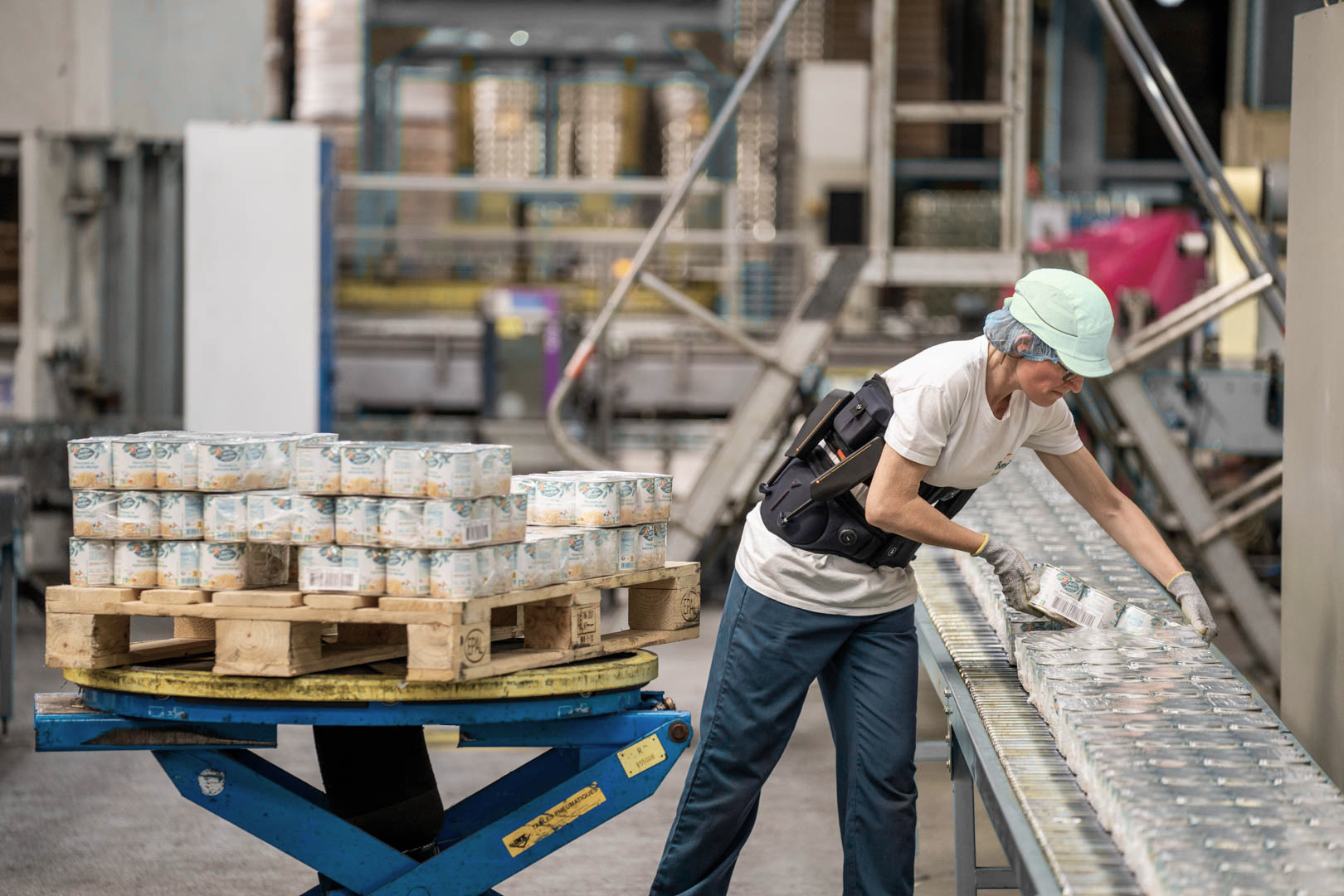
Processing and line work
In industrial food processing, strain is not caused solely by heavy loads. Repetitive movements, awkward working heights, and maintaining a fixed body position for long periods can also be significant. Examples include tasks such as sorting, portioning, loading machines, or manually processing products.
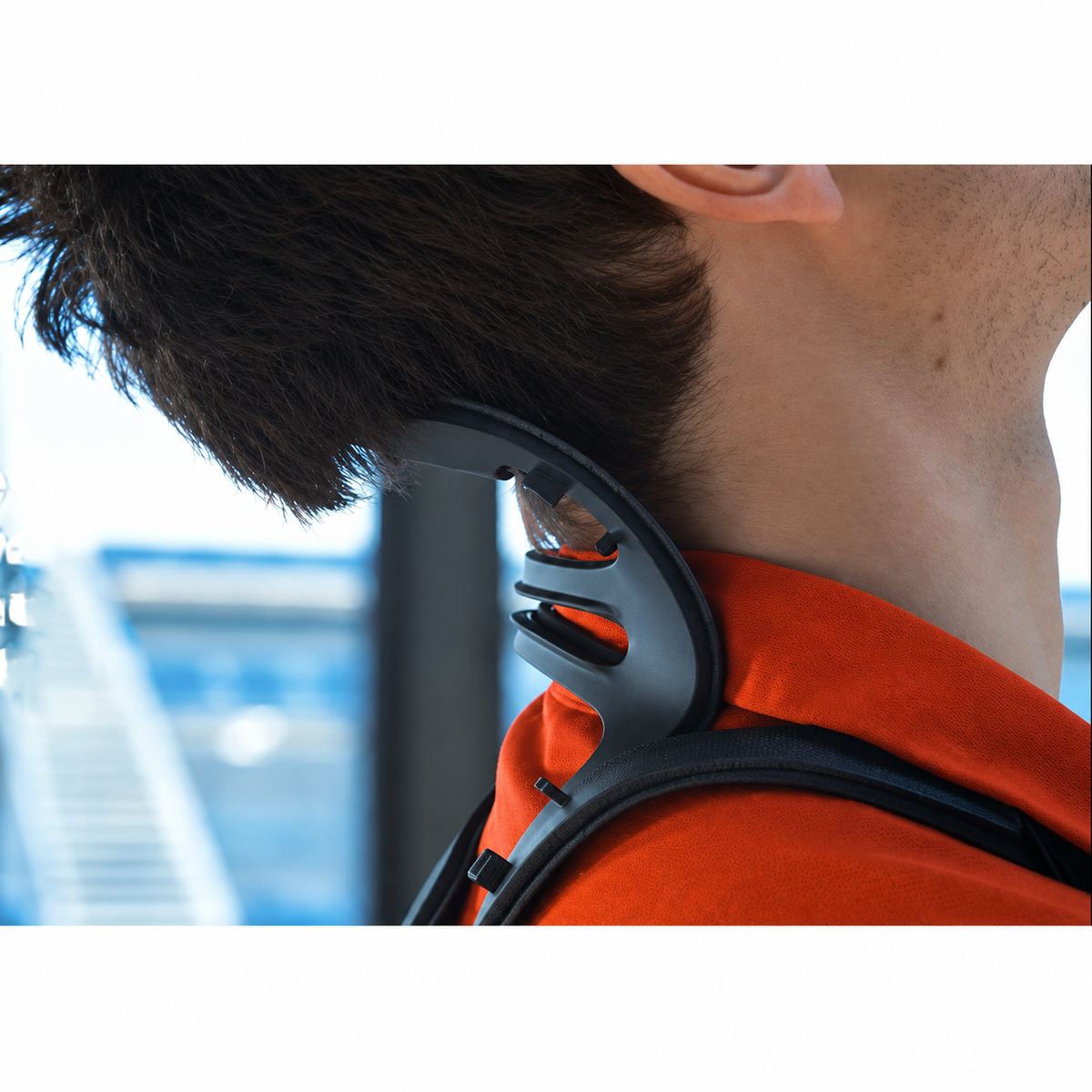
Exoskeletons in gastronomy and catering
In restaurants, hotels, and catering businesses, exoskeletons are not fundamentally ruled out. However, the hurdles are often higher than in structured production or warehouse processes.
In service roles, an unobtrusive appearance, close contact with guests, quick changes of direction, and free arm movement are important. Therefore, it is realistic that visible or bulky systems may encounter issues with acceptance. A sweeping statement that waiters would fundamentally reject exoskeletons would not, however, be reliable.
In the kitchen, too, employees frequently switch between workstations, turn in confined spaces, reach at varying heights, and move near hot surfaces. A system that supports one specific posture may hinder other movements. For chefs and service staff, practical testing in the actual workplace is therefore particularly important.
For catering companies, tasks outside of guest contact may be more relevant: loading and unloading vehicles, setting up and breaking down, moving crates of beverages or thermal containers, as well as returning and cleaning equipment. Here, too, it applies that available transport and lifting aids should be considered first.

Cleaning, dishwashing, and facility services
Cleaning and dishwashing staff can also be subject to physical strain. Potential stressful situations include loading and unloading dishwashers, moving filled dish racks, working at low machine openings, or prolonged bending forward.
Important consideration before using an exoskeleton
Not every physical strain immediately justifies an exoskeleton either. First, it should be examined whether the workplace can be improved ergonomically, for example through better working heights, shorter reaching distances, reduced container weights, lifting aids, or adapted material flows.
For infrequent lifting operations, highly variable loads, or existing lifting aids, the additional benefit may be low. Importantly: An exoskeleton does not automatically increase the permissible load and does not replace a suitable lifting or transport device. Exoskeletons should therefore only be used if a relevant residual strain remains after ergonomic improvements and the system can be used safely, hygienically, and without hindrance.
In production areas, safety, freedom of movement, and hygiene must also be evaluated: The system must not get caught on machines, conveyor systems, or work surfaces, restrict escape routes, or compromise hygiene concepts. A risk assessment is also required for workplaces with exoskeletons.
Since there is no universal solution, activity, comfort, perceived support, budget, and wearability over the entire work cycle should be evaluated.
Which exoskeleton is suitable for the task?
The selection process does not start with the product, but with the load.
Back-supporting exoskeletons are primarily considered for frequent bending, lifting, and setting down. Shoulder and arm support is more suitable for prolonged work with raised arms. Support for static standing can be of interest at stationary workstations if employees have to stand for long periods but need to change their position regularly.
To conduct an assessment, at least the following questions should be answered:
- Which movement or posture causes the strain?
- How frequently and for how long does it occur?
- Which part of the body should be supported?
- Which movements must be fully preserved?
- Are there hygiene, temperature, or cleaning requirements?
- Is other personal protective equipment being worn?
- Are there narrow passageways, vehicles, or contact with machinery?
- Can a technical or organizational solution be implemented instead?
Assess costs and economic efficiency realistically
For an individual restaurant, the purchase of an exoskeleton can be difficult to justify economically. This is especially true if the strenuous activity occurs only occasionally, few people use the system, or a more cost-effective workplace adjustment is possible.
In larger food service operations, central warehouses, industrial bakeries, production plants, or distribution centers, the decision can be examined more systematically. In doing so, not only acquisition costs should be considered, but also:
- the number and duration of strenuous activities,
- the number of eligible workstations,
- the effort involved in adjustment, training, and cleaning,
- potential limitations in the process,
- employee acceptance,
- alternatives such as lifting aids or workplace modifications,
- results from a time-limited practical test.
To better estimate the economic possibilities, the ROI calculator from noonee can help. It assists you in determining potential savings and the payback period based on your operational framework.
Concrete savings should only be mentioned once operational data is available. Without such data, any promises regarding productivity, downtime, or amortization would not be credible.
Testing exoskeletons under real-world conditions
Whether an exoskeleton works is not shown in a general product description, but in the actual workflow. For food businesses, an application-oriented selection is therefore recommended: identify the strain, examine possible alternatives, select a suitable support system, and test it under real conditions.
Affected employees should be involved early in this process. Feedback on freedom of movement, heat development, pressure points, cleaning, and perceived support is just as important for the decision as technical product features.
For a well-founded decision, it is recommended to test the appropriate exoskeleton within the framework of a structured test phase under real working conditions and to systematically evaluate the experiences.
Would you like to check whether an exoskeleton fits your activity in production, packaging, warehousing, or catering? Describe the workplace and the strenuous movement sequence to us. Together, we will narrow down suitable systems and possible alternatives.