Work in Transition – People Remain at the Center of Industrial Performance
The industry is continuously evolving. Production facilities are becoming smarter, processes more efficient, and automation is taking on more and more tasks. Yet one thing remains unchanged: humans continue to play a central role, and not out of mere necessity, but by design. They are and will remain a decisive factor in value creation. At the same time, the human body reaches its limits in many work processes. This is exactly where suitable tools come into play – and today, that includes exoskeletons.
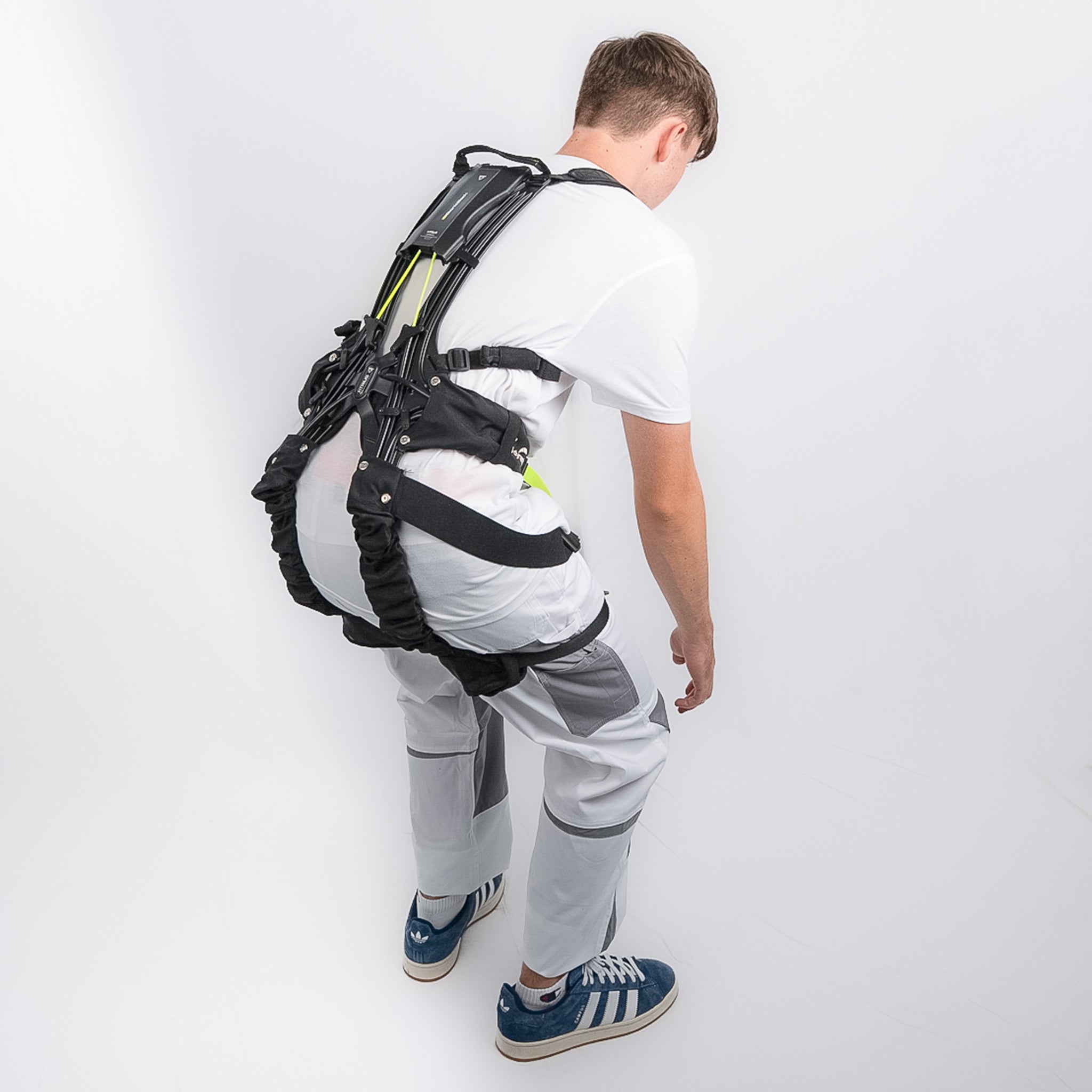
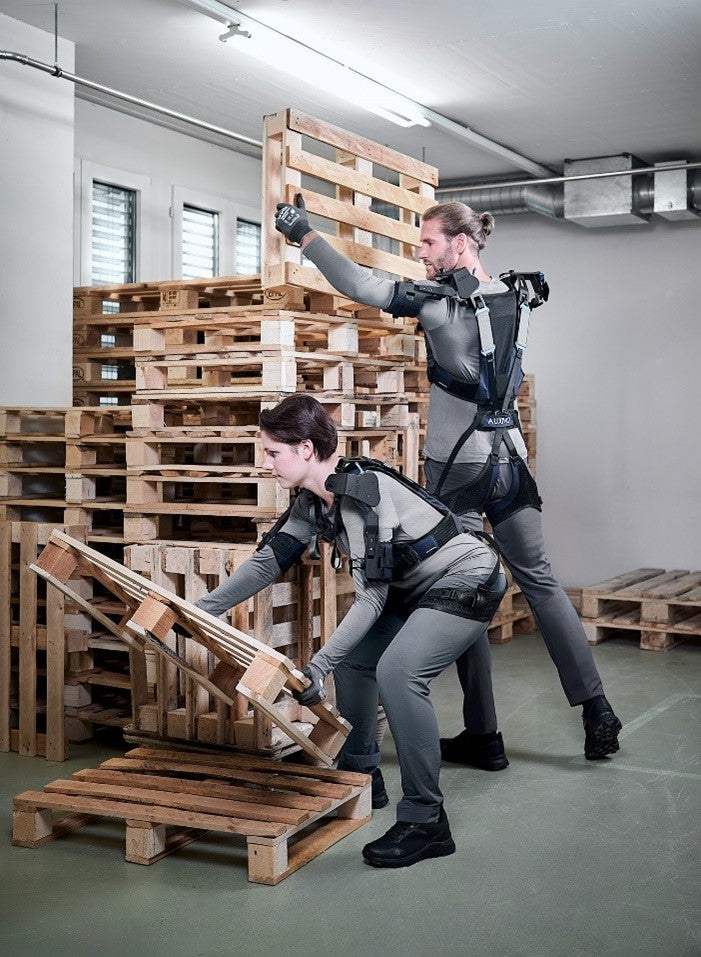
Employees in production, assembly, and logistics move components, operate machines, assemble parts, and perform precise work steps every day. Many of these activities are physically demanding. Working overhead, standing for long periods, working in a stooped posture, or performing constantly repetitive movements are still part of everyday work.
No single movement represents the greatest challenge here. The deciding factor is their cumulative effect. What is hardly noticeable over minutes develops into an enormous burden over hours and years for the back, shoulders, legs, and the entire musculoskeletal system. Exoskeletons serve as intelligent support that relieves the strain on the human body.
Stay productive through less stress: The Chairless Chair
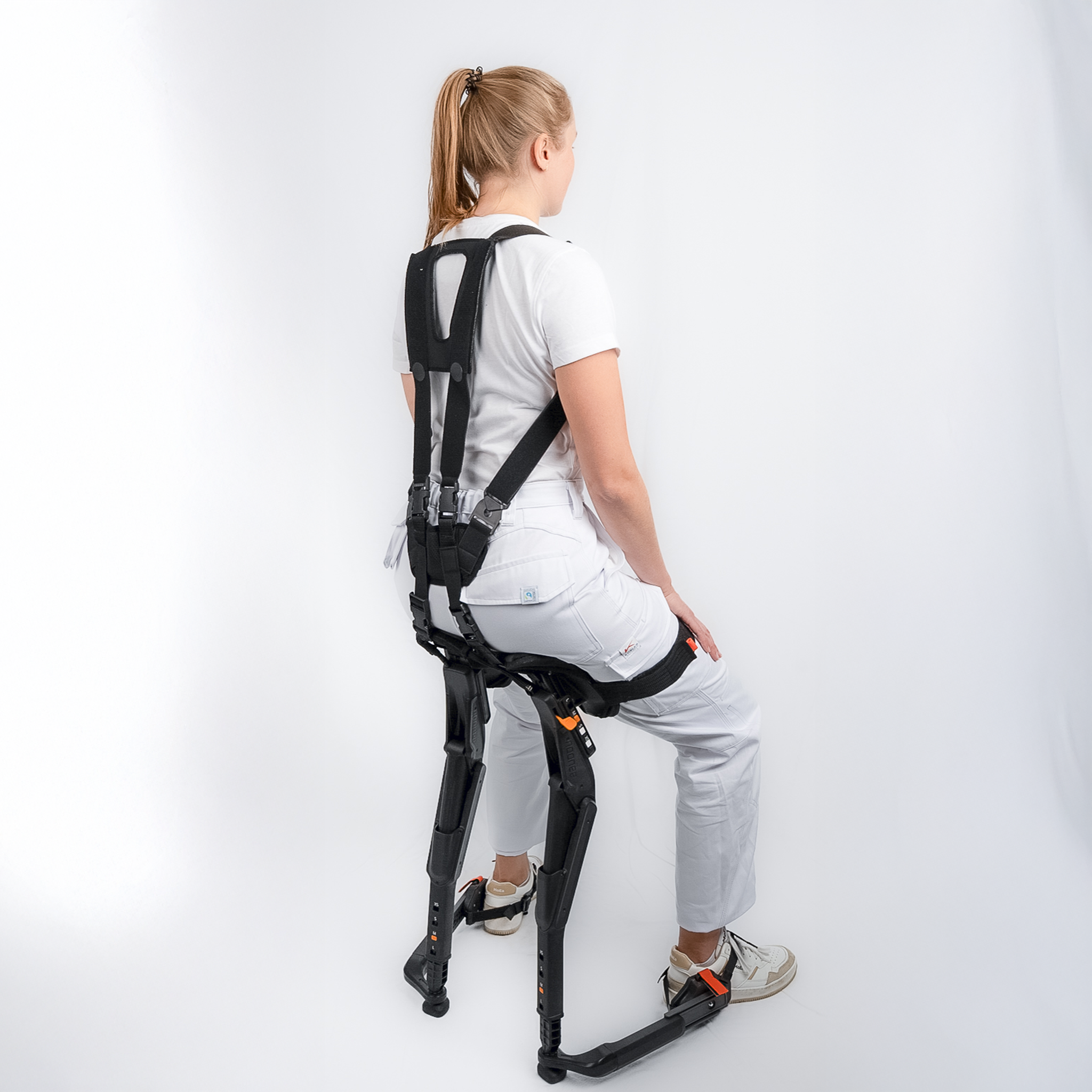
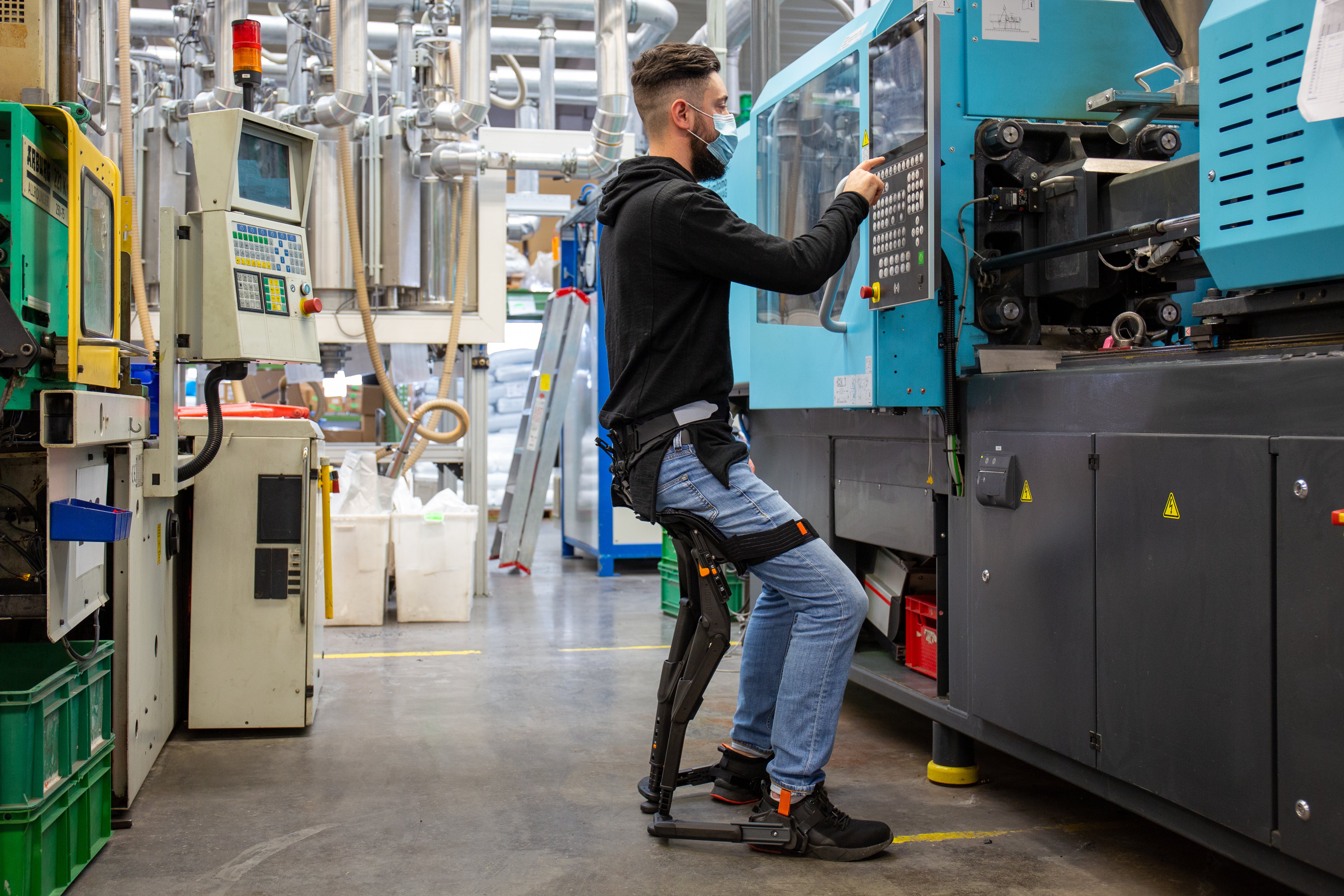
Ergonomics is a top priority: Working ergonomically, comfortably and even more productively without changing your workplace - the Chairless Chair makes it possible. Simply put it on in a few seconds and you'll be working in a healthy posture. You can switch seamlessly between active sitting, standing and walking. The Chairless Chair sets a milestone, especially in the area of ergonomics! This innovation doesn't cost any money, it makes money, because with the Chairless Chair there are fewer days off and capacity bottlenecks are reduced. In addition to being used in assembly, order picking and production activities in industrial use, the Chairless Chair can also be used in many other sectors. Please feel free to contact us - we will analyze your workplaces together and test the use of the Chairless Chair at your location.
Example: Christoph experiences the Chairless Chair
Christoph is a mechanic. He likes going to work, but in the evenings he comes home increasingly exhausted and with back pain. Because he is not alone in this, his plant manager requests the Chairless Chair as a test project.
Johanna from noonee introduces Christoph and his colleagues to the Chairless Chair: a light, stable exoskeleton that can be worn flexibly on the body. In this way, the Chairless Chair relieves the strain on the back, knees and neck. Everyone gets a short training session, with Johanna adjusting the Chairless Chair to the individual shoe and body size.
Christoph is surprised at how easy it is to put on the Chairless Chair. It takes less than a minute and it is ready for use. He feels that the Chairless Chair requires dynamic sitting. This is not strenuous, but rather supports his health. In the subsequent practical test, Christoph quickly realises that he can work much more comfortably with the Chairless Chair and that his performance is maintained. When he comes home in the evening, the work is done - and not him. Back pain is now a thing of the past!
Developed for everyday industrial use
An exoskeleton can only create genuine added value if it integrates seamlessly into existing work processes. That is why the focus at noonee is not on the most complex technologies possible, but on solutions that have proven themselves and function in everyday work.
Our exoskeletons were developed for real industrial requirements. They are lightweight, comfortable to wear, and support people exactly where physical strain occurs, without altering work sequences or restricting freedom of movement.
The result is an ergonomic solution that is accepted, works intuitively, and fits naturally into existing production, assembly, and logistics processes.
Experience exoskeletons in industry – directly in your own work environment
Every workplace is different, which is why an individual assessment of the respective tasks is worthwhile. Exoskeletons are most effective where physical strain occurs daily and accumulates over hours.
Would you like to learn how exoskeletons can specifically support your production, assembly, and logistics? Then speak with our experts. Together, we will analyze your requirements, identify suitable solutions, and, upon request, facilitate a test phase directly in your work environment.

Get in touch with us!
FAQ
When using exoskeletons in daily work, do you need to be particularly careful or technically skilled?
Exoskeletons are designed for daily industrial use and are deliberately kept simple. After a brief introduction, they can be used without special prior knowledge and integrate into normal workflows.
Do exoskeletons restrict freedom of movement or usual working methods?
No. Modern exoskeletons are designed to support natural movements without restricting them. The goal is to relieve strain during movement, not to alter it.
Can different exoskeletons be combined with each other?
In principle yes, but only in sensibly coordinated applications. In practice, one system is usually used per activity (e.g., back or shoulder support). Combinations are possible if different load zones occur simultaneously, but must be ergonomically checked.
How quickly do employees get used to using exoskeletons?
Acclimatization usually happens very quickly. After a short time, the systems are perceived as a supportive part of the work routine, especially for recurring or strenuous tasks.
How is it decided whether an exoskeleton is beneficial in a workplace?
The application is evaluated through a workplace analysis, which examines posture, duration of strain, and activities.
In addition, noonee offers a pilot project, in which exoskeletons are tested directly in everyday work. This allows for a practical assessment of whether the ergonomic relief works in the specific process and whether the system can be effectively integrated.