Exoskeletons for the Aerospace Industry
At the airport, time pressure, changing work environments and physical activities come together. Particularly in ground handling and technical work, loads are moved, pieces of luggage are transferred, or tasks are performed in different body positions.
Exoskeletons can provide physical support for selected activities. Which system is suitable varies significantly between baggage handling, work in the cargo hold, passenger processing at the gate, and technical work on the aircraft.
Physical work between the terminal, apron and aircraft
Ground handling encompasses numerous activities involved in preparing an aircraft. According to the European Union Aviation Safety Agency (EASA), these include, among others, loading and unloading baggage, preparing the aircraft for boarding, providing catering equipment, and refueling.
The baggage handling process, in particular, involves several stages. After check-in and security screening, baggage is sorted using conveyor systems and then, depending on the aircraft type, assembled into Unit Load Devices or prepared for transport to the aircraft.
Within this process chain, the activities of particular interest for ergonomic support are those involving manual handling, repetitive movements, or strenuous postures.
- Conveyor system
- Baggage cart
- Belt loader
- Cargo hold
Baggage Handling: Lifting, Moving and Loading
Sort luggage and load it onto carts
Conveyor systems transport a large proportion of luggage within the airport. Nevertheless, manual transfer points remain. For example, the US National Institute for Occupational Safety and Health (NIOSH) describes how workers manually move pieces of luggage between conveyor systems, baggage carts and other handling equipment.
As a result, the task does not consist of a single lifting operation. Workers grasp pieces of luggage, lift or pull them from one position, turn or move them, and then set them down again in another location.
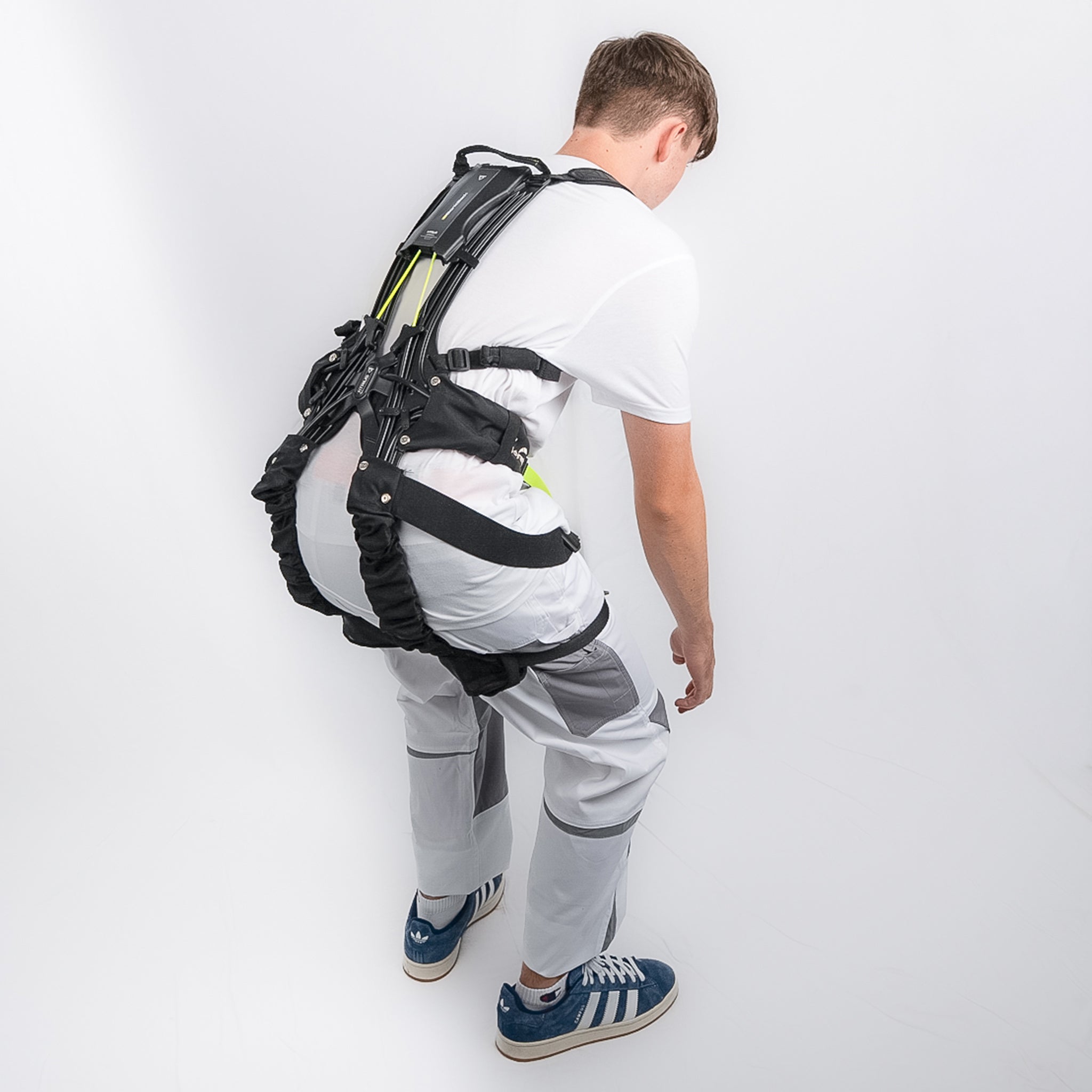
Back exoskeletons can be of interest here if the respective system is suited to the lifting and bending movements that actually occur. The decision should therefore not be based on the weight of the load alone. Reach distance, working height, frequency and freedom of movement also play a role when assessing a task. NIOSH identifies weight, lift height and distance, reach, trunk rotation or lateral bending, grip, frequency, as well as workplace and equipment configuration as factors influencing the ergonomic risk in luggage handling.
- Load weight
- Working height
- Reach distance
- Frequency
- Freedom of movement
Loading and unloading baggage from the aircraft
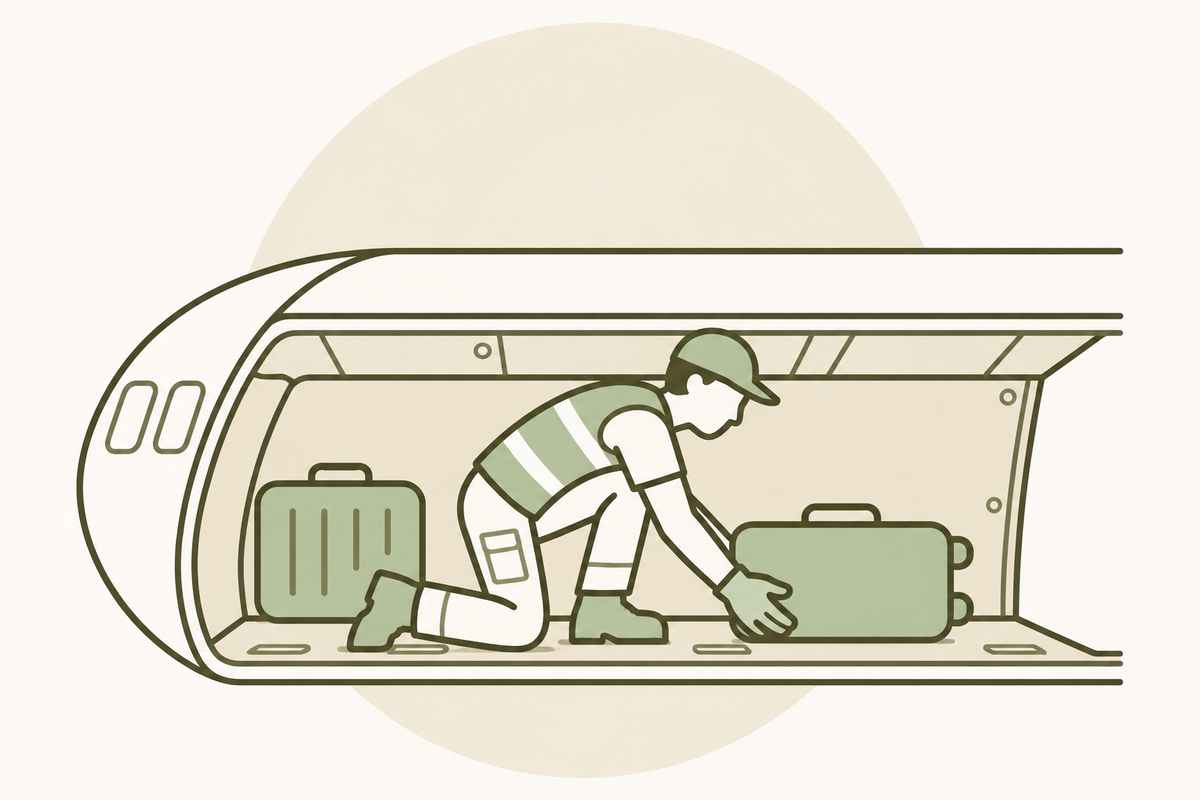
The nature of the work changes on the apron. According to NIOSH, baggage handlers, for example, move baggage from the cart onto a belt loader, handle it at the cargo hold door, and then stack it in the cargo hold. During unloading, this process is carried out in reverse.
This creates different phases of movement within a single work process. This is precisely what is relevant for choosing an exoskeleton: Support must not only suit an isolated lifting operation but also take into account the required range of motion throughout the entire task.
Working in the cargo hold
The transition from the open area outside the aircraft to the cargo hold is particularly interesting. Here, the working environment changes significantly. Luggage must be moved further and positioned within the cargo hold. NIOSH studies on baggage handling explicitly consider activities such as lifting, pushing, and pulling in the cargo hold.
For a potential exoskeleton application, this means: Not every type of support that seems useful when lifting outside the aircraft is automatically suitable for work inside the cargo hold. Range of motion, required mobility, and specific working positions should therefore be assessed separately.
Aircraft maintenance and technical work
In addition to baggage handling, aviation offers other physically demanding areas of work. In maintenance, inspection, and assembly work, the physical strain depends heavily on where on the aircraft the work is being done and what posture is required for the duration of the task.
Working with raised arms
If tools or components are repeatedly guided with raised arms, the ergonomic focus is different from that in baggage handling. In this case, a shoulder or arm exoskeleton may be considered instead of back support.
Such systems should therefore not be generally regarded as an “exoskeleton for mechanics.” What matters more is whether a specific maintenance or assembly task actually involves prolonged periods of working at or above shoulder height.
Stooped and spatially restricted activities
Technical work may also require postures in which employees cannot work upright at all times. At the same time, the task may require frequent changes in position, walking, kneeling, or switching between different work steps.
This is precisely where a major limitation of a purely product-focused selection becomes apparent: support and freedom of movement must be considered together. An exoskeleton should therefore be assessed based on the entire work process, not on a single posture.
Additional ground-based applications
Not every ergonomically demanding activity in the aviation environment involves baggage handling or maintenance.
Prolonged standing and stationary activities
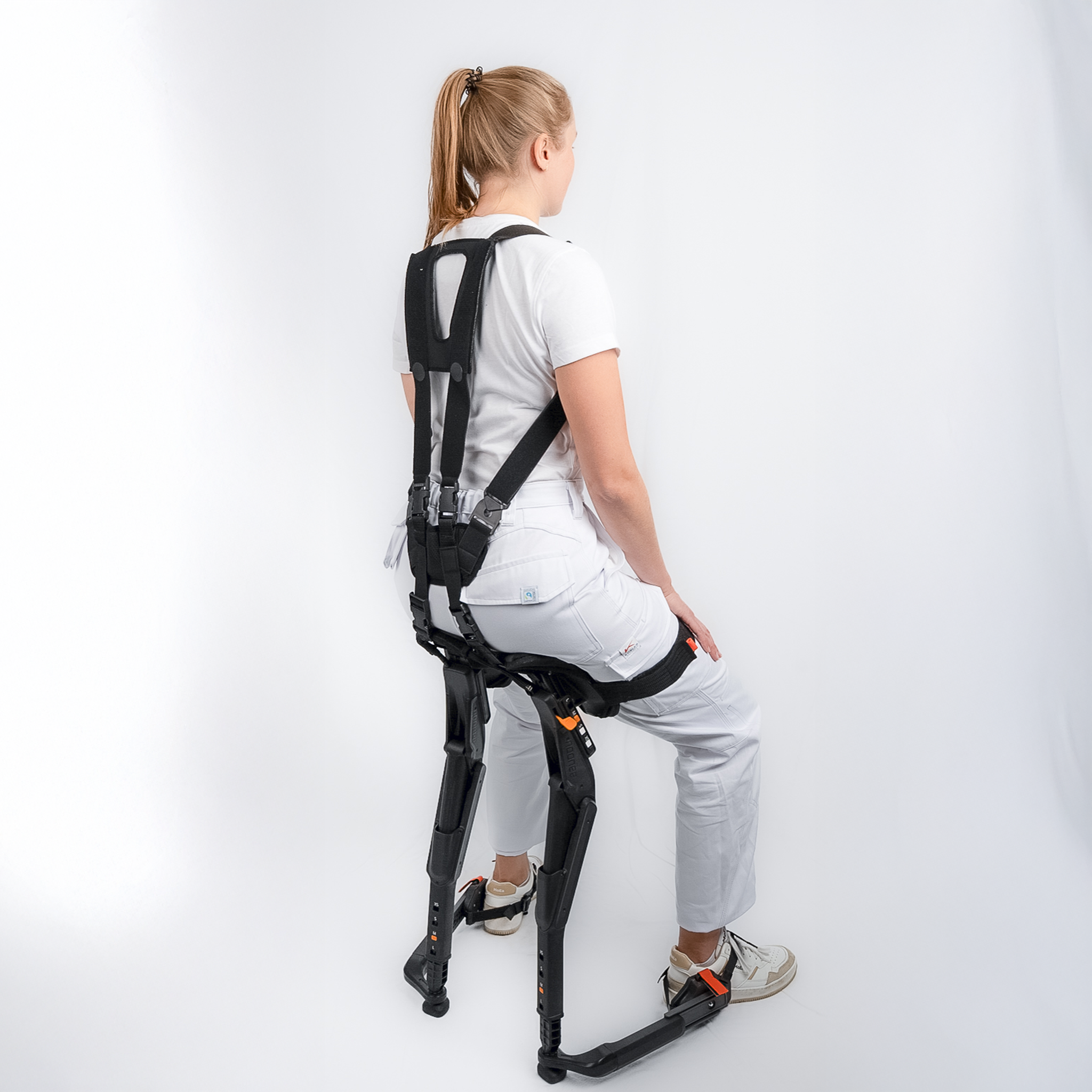
Workplaces with prolonged periods of standing place different demands on the body than repetitive lifting. For such work environments, support systems specifically designed for standing tasks may be relevant. Check-in and gate staff often spend many hours on their feet. During check-in, staff assist passengers, check travel documents, and accept luggage. At the gate, staff assist with passenger processing, manage boarding, check boarding passes, and inform travelers about changes or the boarding process. In these roles, physical strain is caused less by heavy loads than by prolonged standing and static postures. For such work environments, support systems specifically developed for standing workplaces may be of interest.
Handling of materials and equipment
Even outside of passenger baggage handling, it pays to take a closer look at manual handling processes. The key is to focus on the individual task: Is something being lifted from the floor? Does material need to be carried or moved? Is the work predominantly static? Are there frequent changes between different activities?
The answers to these questions lead much more effectively to the right product group than a general search for an “exoskeleton for the aviation industry.”
Which exoskeleton is suitable for which activity?
For the preliminary selection, the use can therefore be broadly structured according to the stress situation:
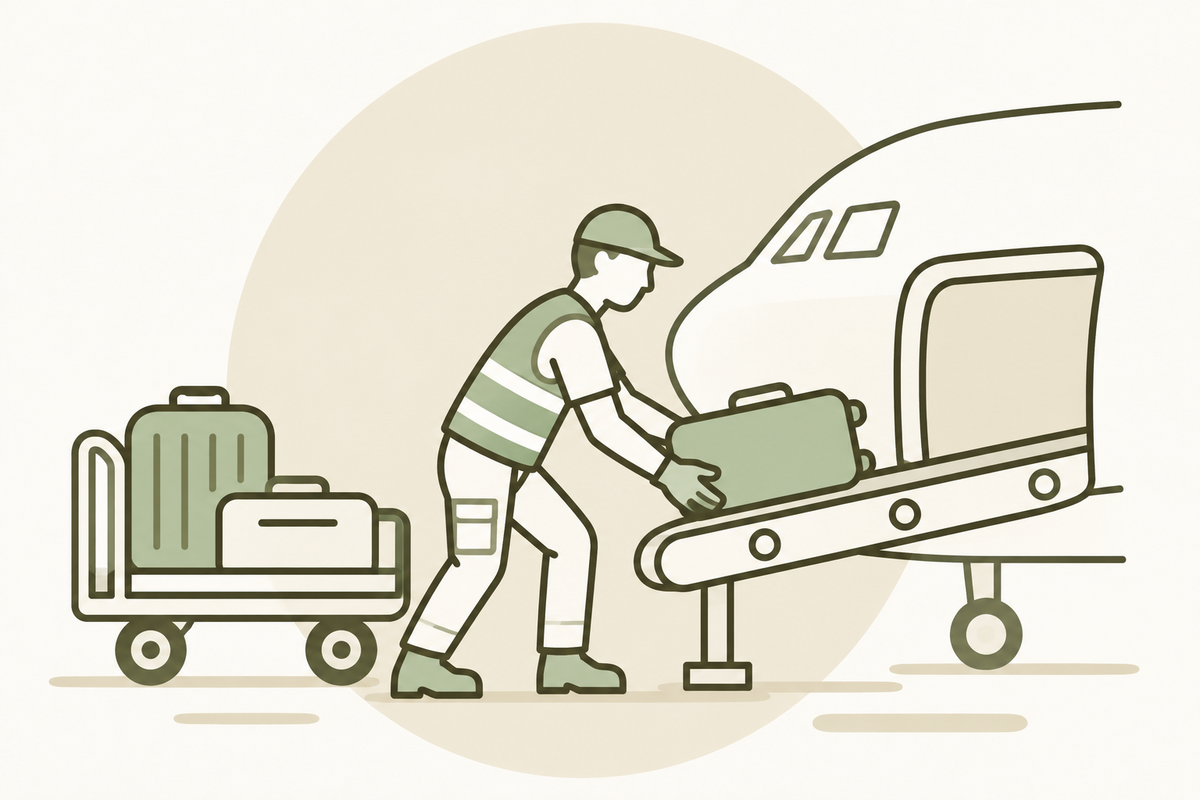
Lifting, bending and moving: possible application for back support
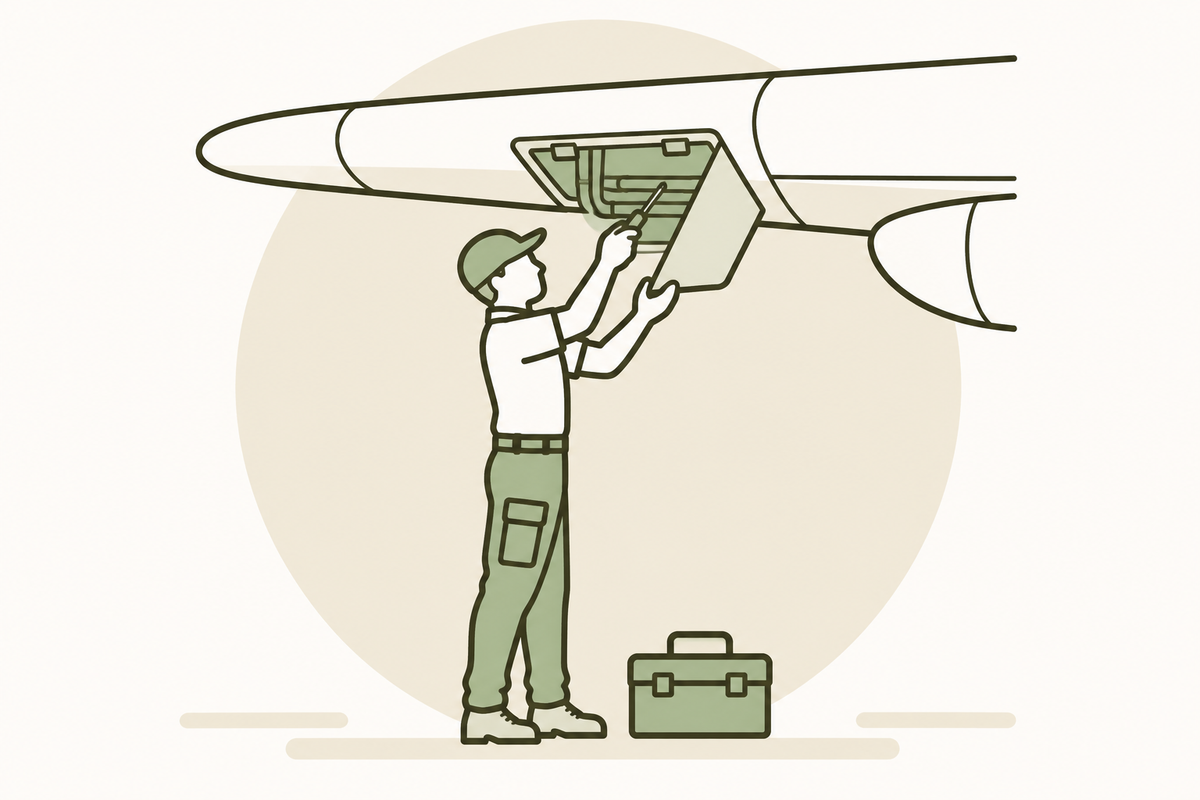
Working with raised arms: possible use for shoulder/arm support

Prolonged standing: possible use with the appropriate leg or seat support
Changing tasks and confined workspaces: pay particular attention to freedom of movement and practical integration
Selecting exoskeletons for real working conditions
Aviation clearly demonstrates why the selection process should not begin with the product category. A baggage handler on the ramp moves differently than someone in the cargo hold. Technical work, in turn, places different demands on arm position, mobility, and workspace.
Therefore, the actual workflow should be considered first:
- Which movements are repeated?
- During which work steps does the relevant physical strain occur?
- How often does the task change?
- What freedom of movement must be maintained?
Only then can you assess what type of support makes sense to try and how to test exoskeletons in the workplace.
Consulting on Exoskeletons for the Aerospace Industry
Are you looking to use exoskeletons at the airport, for example for baggage handling, ground handling, or technical work on the aircraft?
Describe the specific workflow and physical strain to us. Together, we can determine which category of exoskeleton is suitable for the respective activity.