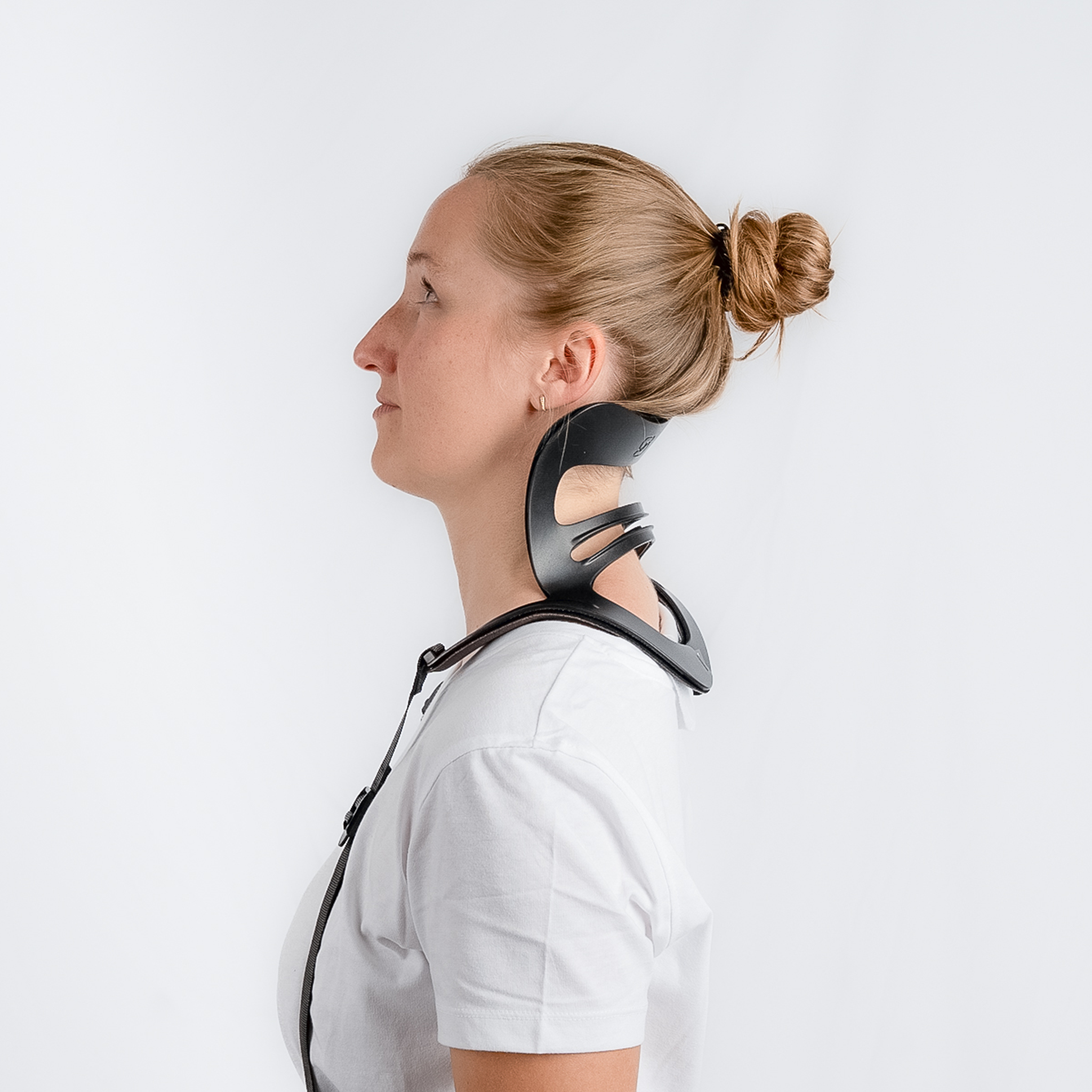
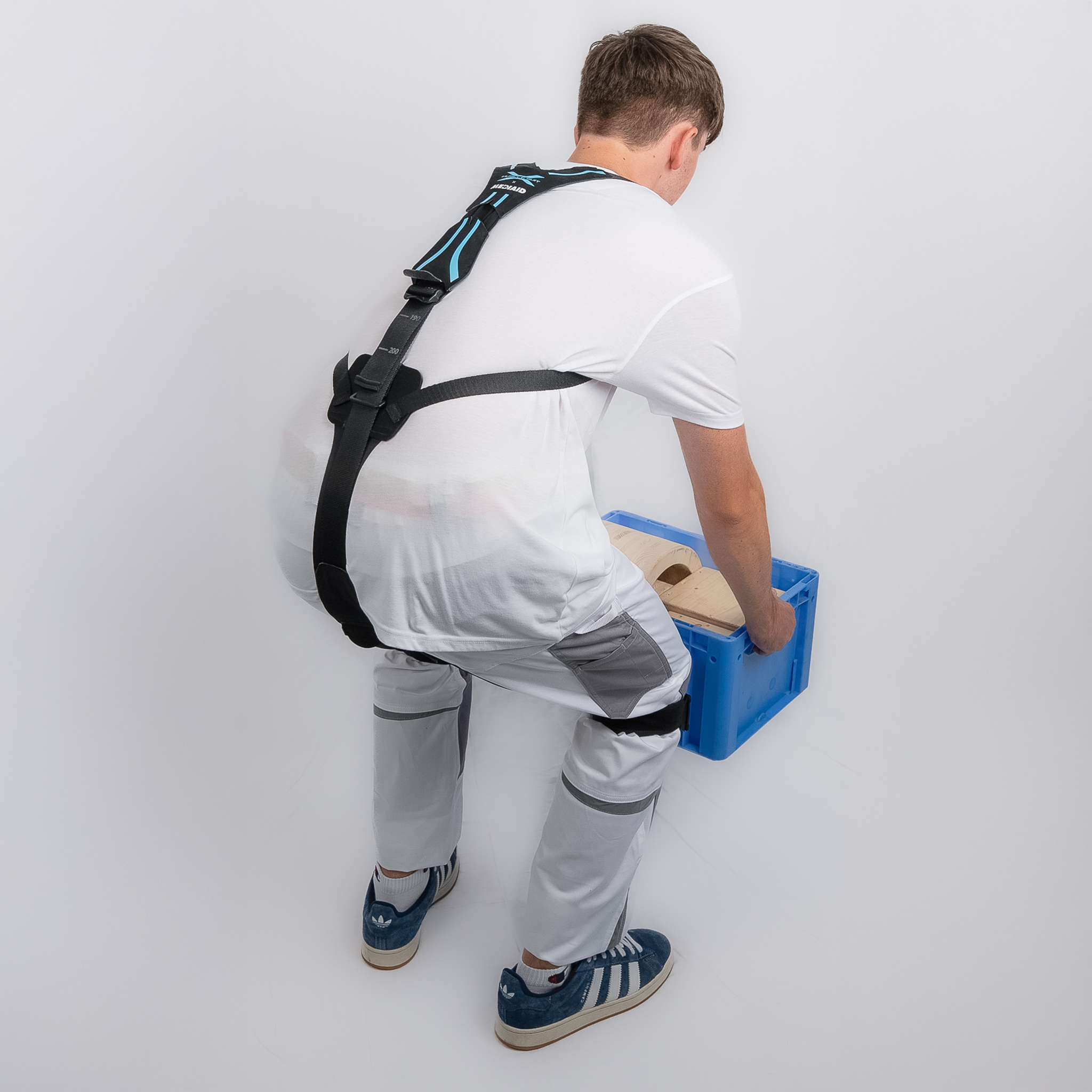
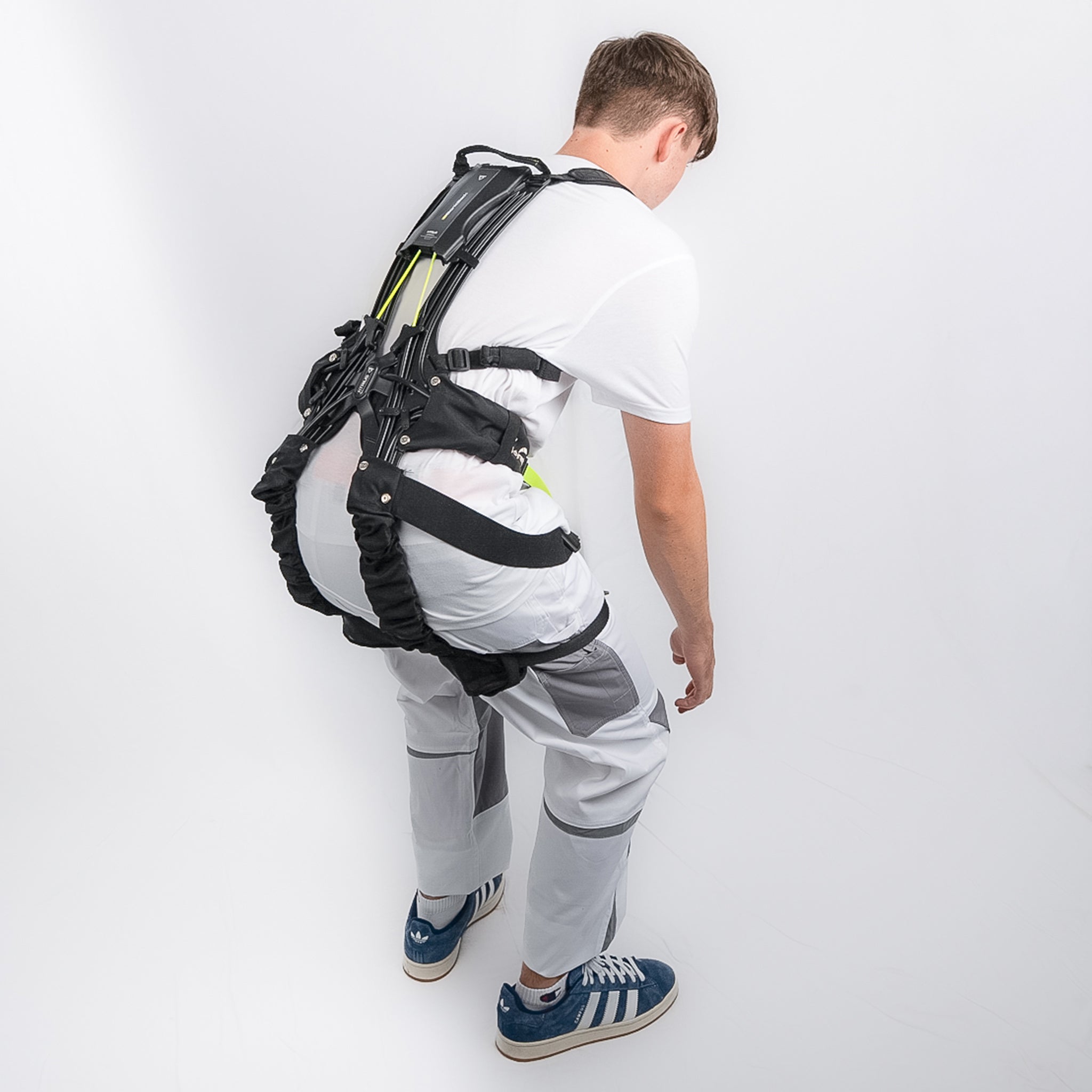
Test exoskeletons in operation
Testing exoskeletons in the workplace: How to proceed
An exoskeleton should be tested under realistic conditions before being introduced into the workplace. This is not just about whether the system feels comfortable. A systematic test must demonstrate whether the exoskeleton is suitable for the task, the employees, and the work environment, and whether it provides the intended support without causing new problems.
This requires a planned test procedure with defined goals, appropriate test subjects, and documented results. A brief demonstration or a one-time trial run is generally not sufficient for a reliable operational decision.
DGUV Information 208-062 "People and the Workplace – Selection and Use of Exoskeletons" describes a structured process consisting of preparation, testing, and evaluation. This process is supplemented by checklists for the task, the work environment, and corporate culture, as well as by assessment methods and questionnaires.
Why a short product test is not enough
When putting it on for the first time, you can roughly assess the fit, weight, and handling. However, many decisive characteristics only become apparent during actual work.
An exoskeleton, for example, may support a primary activity while simultaneously interfering with walking, sitting, climbing stairs, operating a forklift, or picking up objects. Issues such as pressure points, heat accumulation, restricted movement, or the need for additional adjustments may also only become evident after prolonged use.
Therefore, both the primary activity to be supported and relevant secondary activities must be considered during the selection process. The DGUV explicitly cites compatibility with tools and other aids as a component of system selection.
What needs to be clarified before the exoskeleton test?
The starting point is not the choice of an exoskeleton, but the description of the workstation. The test team should determine which strain is to be reduced and during which movements it occurs.
Relevant initial questions include:
- Which part of the body is primarily under strain?
- Which movements or postures occur?
- Are loads being lifted, held, carried, pulled, or pushed?
- Is work being performed above shoulder or head height?
- How long and how frequently does the strain occur?
- Which tools are being used?
- Are there already technical or organizational possibilities for improvement?
In occupational health and safety, exoskeletons are classified as personal protective measures. According to the hierarchy of controls presented, substituting, technical, and organizational solutions should be examined as a priority.
Therefore, the question is not just: "Which exoskeleton do we want to test?" It is first and foremost: "Which operational strain problem do we want to investigate?"
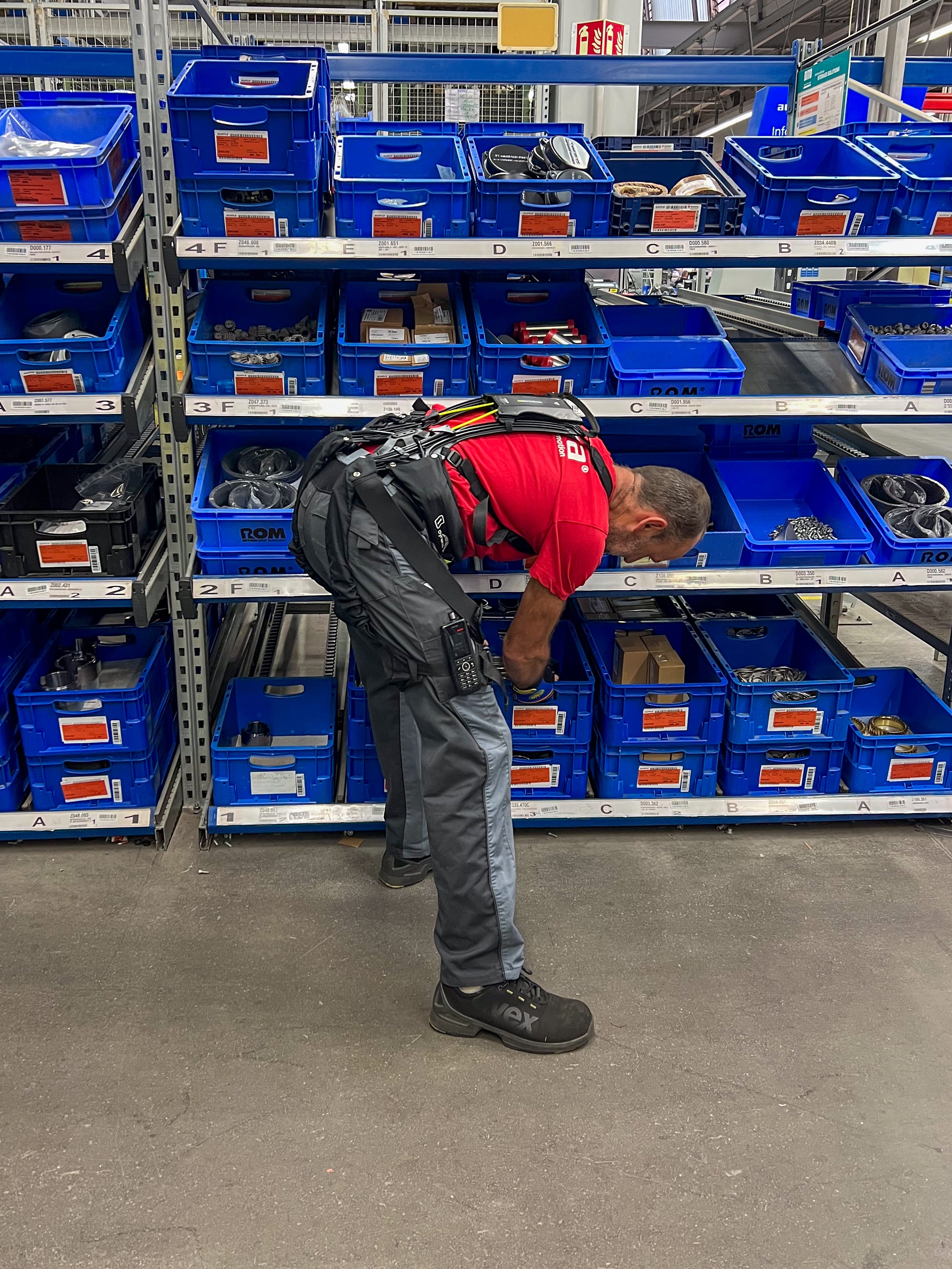
Take primary and secondary occupations into account
An exoskeleton must support the desired movement without making other necessary work steps unreasonably difficult. To this end, the entire workflow must be captured.
In addition to the actual main task, the following situations, for example, may be relevant:
- Walking and climbing stairs
- Sitting or working on one's knees
- Working in confined areas
- Tool changes
- Operating machines or communication equipment
- Driving industrial trucks
- Moving between workstations
- Breaks and interruptions to work
- Quick removal in an emergency situation
For functional evaluation, the DGUV mentions, among other things, independent putting on and taking off, operability, deactivation of support, walking, squatting, sitting, and arm movements.

Define goals and success criteria
Before beginning, it must be determined what the test is intended to answer. Otherwise, there is a risk that after the trial, there will be many impressions, but no clear decision can be made.
Possible test objectives are:
- Does the support area fit the strenuous movement?
- Do the test subjects perceive the activity as less strenuous?
- Is the required freedom of movement maintained?
- Is the system compatible with tools, work clothing, and protective equipment?
- Can the test subjects put it on, adjust it, and take it off independently?
- Do pressure points, skin irritation, or new complaints occur?
- Is the system used voluntarily for the intended duration of use?
- Are work quality and safe execution maintained?
The specific target areas must be determined in advance by the company.
The DGUV recommends defining during the evaluation which characteristics are considered, where the target areas for the respective activity profile lie, and how the systems are assessed based on these characteristics.
Systematically testing exoskeletons: seven steps

Step 1
Assemble test team
Testing should not be managed solely by procurement or production management. In particular, the intended users as well as the company's internal occupational safety and ergonomics functions should be involved.
The German Social Accident Insurance Institution for the woodworking and metalworking industries (BGHM) lists occupational safety specialists, company physicians, the works council, and other experts as parties to be involved.
Which roles are required for a specific company depends on its organization. It is important that technical, ergonomic, occupational medical, and user-related perspectives are taken into account.

Step 2
Select suitable activities
Not every physically demanding workplace is automatically suitable for an exoskeleton. The task must align with the system's support principle.
A back-support system should not be selected solely because loads are moved at a workstation. The deciding factor is whether the specific trunk movement or body posture actually falls within the system's support range. The same applies to shoulder, arm, hand, or leg support.
The selection should therefore be based on a task analysis and the identification of the primarily strained body region.

Step 3
Define exoskeleton requirements
The activity analysis results in a requirement profile that describes the necessary support and operational framework conditions. It may include the following points:
- body region and movement to be supported, passive or active support,
- required adjustment ranges, body sizes of the intended user group,
- compatibility with tools and protective equipment, movements that must remain possible,
- conditions such as dust, moisture, or outdoor use, requirements for cleaning and hygiene, quick putting on and taking off.
The decision matrix of the BG BAU structures the pre-selection, among other things, into safety, work task, comfort and fit, maintenance and care, training and instruction, and costs.

Step 4
Instruct employees and adapt systems
Before the test, test subjects must be instructed on safe and intended use, and the system must be individually adjusted. At a minimum, the following questions should be addressed:
- How is the system put on and taken off?
- How is it adjusted to body measurements?
- How can the support be set or deactivated?
- For which activities is it intended?
- For which situations is it not suitable?
- What should be done in case of pressure points, pain, or technical problems?
- Who is the contact person during the test phase?
The BG BAU explicitly states that the instruction of test subjects and the individual adjustment of the test models are prerequisites for the practical test.

Step 5
Preliminary test under controlled conditions
Before use in the full work process, a limited preliminary trial is recommended. This allows the test subjects to become familiar with handling and the supportive effect.
The preliminary trial should include typical movements as well as safety-relevant situations. These include, for example, putting on and taking off, walking, sitting, climbing stairs, bending, accessing tools, and quick removal.
In its selection process, the DGUV distinguishes between preliminary and main tests and provides for trials at the actual workplace or, if this is not organizationally possible, at a simulated workplace or in a realistic test course.

Step 6
Conduct a practical test in the workplace
The main test should ideally take place at the intended workstation and under real-life conditions. This is the only way to see how the exoskeleton interacts with workflows, tools, changing movements, environmental conditions, and time-related strain.
Test subjects should use the system across the defined operational situations. Deviations and interruptions are also insightful. If the exoskeleton is taken off, it should be documented when and why this occurs.
The DGUV recommends a systematic approach and describes testing and trial phases as an appropriate way to evaluate support effects. Objective and subjective methods should be combined if possible in order to obtain a more comprehensive overall picture.

Step 7
Evaluate results and decide
After the test, the results are compared with the pre-defined objectives. In addition to average values, individual serious safety problems, complaints, or incompatibilities can be decisive, despite other positive evaluations. Possible decisions include:
- The system is only suitable for certain sub-tasks.
- Settings, training, or test conditions must be adjusted.
- A different model should be tested.
- An exoskeleton is unsuitable for this workplace.
- Other technical or organizational measures are preferable.
A negative test result does not automatically mean a failed project. It can prevent the purchase of an unsuitable system that would later remain unused.
How long should an exoskeleton be tested?
It is not possible to reliably define a universally suitable test duration for all companies and activities. The required duration depends, among other things, on how frequently the relevant task occurs, how much workflows vary, and how many intended users are involved.
The BG BAU decision matrix recommends a supervised practical test over a sufficiently long period of at least two weeks for a realistic impression.
This minimum duration is a useful benchmark, but not universal proof of long-term suitability. The test should include all typical situations that are relevant to the decision. If certain work processes occur only rarely, different shift conditions exist, or several groups of people are to use the system, a longer or supplementary test phase makes sense.
The decisive factor is therefore not just the number of days. The decisive factor is whether the test represents a representative cross-section of actual everyday work.
Which results are considered successful?
A general threshold from which an exoskeleton is considered successfully tested has not been established. Success criteria must be derived from operational requirements prior to testing. A positive overall result should take multiple dimensions into account.
Safety and suitability
The exoskeleton must be able to be used as intended. It must not unacceptably impede necessary protective measures, escape routes, first-aid measures, or safety-critical movements. Its use must also be taken into account in the risk assessment.
Perceived support
The test subjects were to perceive the support during the specified target activity in a traceable manner. This assessment was intended to refer to the previously determined movement or body region, not to a general feeling of “easier work.”
Usability and freedom of movement
The designated primary and secondary activities must remain executable. Depending on the job profile, this includes, for example, walking, bending, sitting, climbing stairs, reaching, tool access, and movement in confined areas.
Comfort and fit
The system must be individually adjustable and must not cause any unacceptable pressure points, skin irritation, or strain on other parts of the body. The DGUV explicitly lists effects on the skin, soft tissue, and tissue as an evaluation criterion.
Acceptance and willingness to use
Test subjects should not just be asked about their general satisfaction. Concrete questions are more meaningful:
- Would you voluntarily continue to use the system for this activity?
- In what situations would you want to take it off?
- Which setting or product feature would need to be improved?
- Do you perceive the system as a support or as an additional restriction?
Questionnaires before implementation, after initial use, and after the test phase are part of DGUV Information 208-062.
Work quality and operational processes
The test should also determine whether there are changes in work quality, error rates, safe execution, or workflow. Increased performance should not be formulated as a primary goal of success. In the interest of safety and health, DGUV Information 208-062 advises against using exoskeletons to increase performance.
Define must-have criteria and evaluation criteria in advance. Safety-relevant must-have criteria cannot be offset by good ratings in other categories. For comfort, perceived support, and ease of use, however, a weighted overall assessment can be useful.
Which measurement methods are suitable?
For internal company tests, standardized surveys, structured observations, and documented user experiences are particularly practical. Scientific studies can additionally employ objective measurement methods for physical strain.
The DGUV distinguishes between subjective and objective methods. Subjective methods, such as surveys, are suitable for internal company trials. Objective methods for measuring physical strain are preferably used in scientific field and laboratory studies.
Ideally, both perspectives are combined.
For an operational field test, the following can be documented, among other things:
- Assessment before the first wear,
- Impression after the first use,
- Assessment after the complete test phase,
- Perceived physical exertion,
- Pressure points or discomfort,
- Freedom of movement,
- Fit and adjustability,
- Time and effort for putting on and taking off,
- Actual duration of use,
- Reasons for removal,
- Compatibility with tools and protective equipment,
- Work quality and safety-relevant observations.
Complex biomechanical measurements are not a general requirement. Such methods require professional planning and evaluation.
Checklist for the industrial exoskeleton test
The following compact checklist serves as a foundation. It does not replace a risk assessment, manufacturer specifications, or an occupational medical evaluation.
This structure draws on the topics covered in DGUV Information 208-062 and the BG BAU decision matrix and is intended here as a condensed summary.

A. Preparation
- The specific strain problem has been described.
- Main and secondary activities have been recorded.
- The primarily affected body region has been identified.
- Technical and organizational measures have been reviewed.
- The work environment has been considered, including
walkways, machines, and environmental factors. - Tools, work clothing, and personal protective equipment have been recorded.
- Goals and decision criteria were established before the start of the test. Responsibilities and points of contact have been clarified.
- The risk assessment was taken into account for the test.
B. Product selection
- The support area matches the
target movement. - Size and adjustment ranges match the intended user group.
- The system is compatible with personal protective equipment and work tools.
- Manufacturer information and usage limits are known.
- Cleaning, maintenance, and storage are clarified.
- The system can be quickly removed in an emergency.
- For active systems, operating time, charging time, and safe deactivation are taken into account.

C. Test subjects and briefing
- The participation and the role of the test subjects are clearly defined.
- The test subjects received proper safety instructions.
- Each system was individually customized.
- Independent putting on and taking off was practiced.
- Contacts for complaints and technical questions are known.
- Feedback can be provided openly or confidentially.
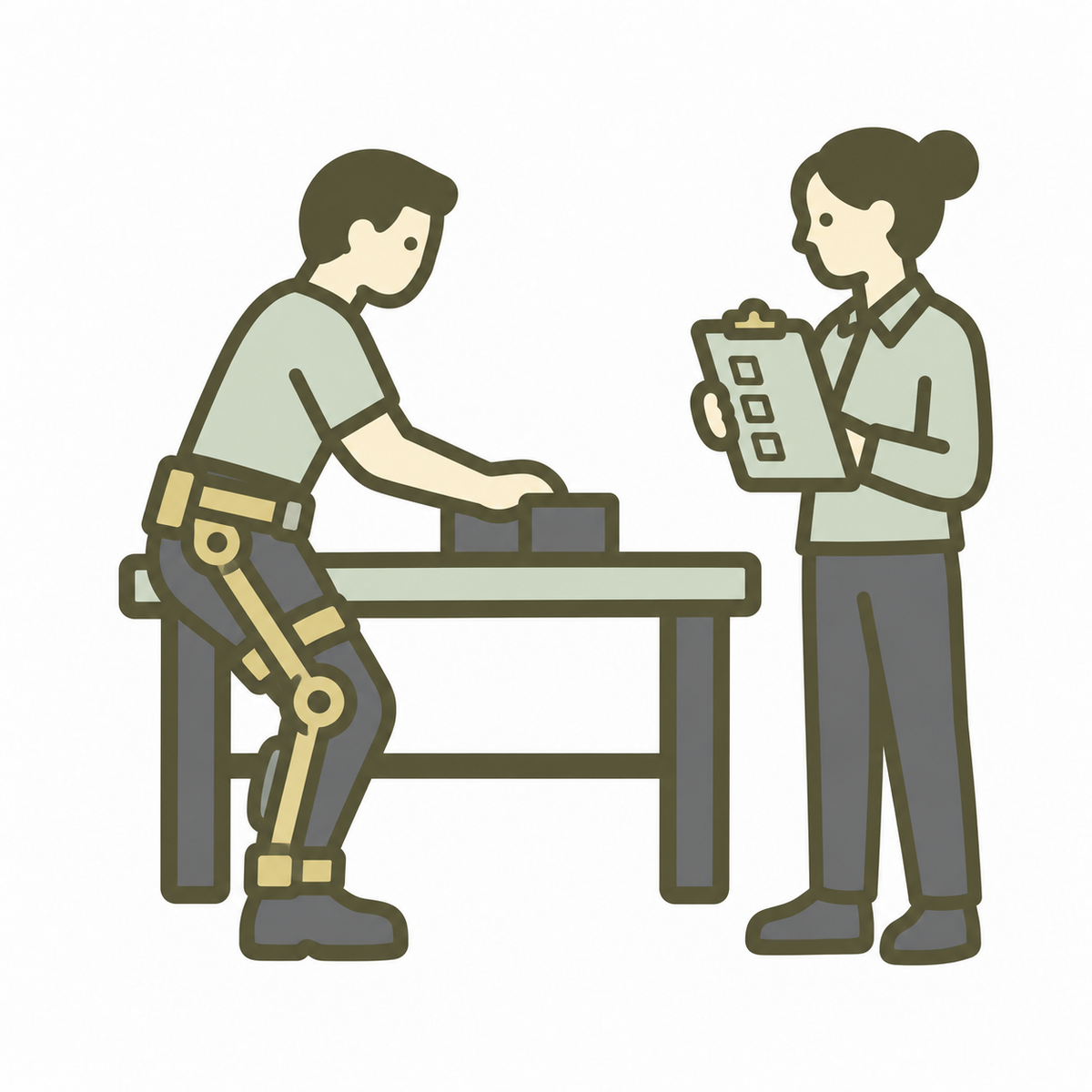
D. Practical test
- The test should take place at the actual workplace whenever possible.
- Typical primary and secondary activities are included.
- Relevant shift and environmental conditions are taken into account.
- Abnormalities, complaints, and discontinuations are documented.
- Reasons for not wearing or removing [the equipment] are recorded.
- Settings and adjustments are documented in a traceable manner.
- The scheduled test times are adhered to.

E. Evaluation
- Safety and hazards have been assessed.
- Support for the target activity has been assessed.
- Freedom of movement and usability have been tested.
- Fit and wearer comfort were recorded for each test person.
- Complaints and adverse effects were documented.
- Compatibility with tools and protective equipment has been confirmed.
- Acceptance and voluntary willingness to use were surveyed. Work quality and workflow were taken into account.
- The result was compared with the pre-defined criteria.
- The decision and outstanding measures were documented.
General or activity-specific checklist?
The best solution is a combination of both.
A general basic checklist ensures that key topics such as safety, risk assessment, instruction, fit, emergency procedures, maintenance, and documentation are not overlooked. It also creates comparable conditions when multiple systems are being tested.
A task-specific supplement, on the other hand, reflects the actual requirements of the workplace. It should be derived from activity analysis, the work environment, and test objectives.
For a workplace involving overhead work, for example, the focus could be on arm mobility, tool guidance, and support effectiveness at various working heights. With forward torso inclination or load handling, different movement phases and secondary activities become relevant. In confined work areas, additional criteria such as passageways, bumping, or changes in movement must be taken into account.
What happens after the trial period?
Following the evaluation, there should be no automatic transition to procurement. First, it must be clarified whether the system:
- is suitable as is,
- is only suitable for certain activities,
- needs to be retested with different settings,
- should be replaced by another model,
- or is not suitable for the workstation in question.
In the event of a positive result, the area of application, user group, instruction, adjustment, storage, cleaning, and responsibilities should be documented. In addition, it must be determined how experience gained after implementation will continue to be recorded.
Testing therefore does not end exclusively with "buy" or "do not buy." It provides a documented basis for a task-related decision.
Would you like to test exoskeletons under real working conditions?
With a structured task analysis, suitable test models, and clear evaluation criteria, you can soundly determine which exoskeleton suits your company. Let us guide you through product selection, preparation, and field testing.
Test exoskeletons now and find the right system.
Conclusion: Check first, then choose
A good exoskeleton test does more than just answer the question of which model makes the best first impression. It shows whether a system is safe, manageable, and permanently suitable for day-to-day work. To this end, four foundations are required:
- a precise analysis of the tasks and the workplace,
- predefined test goals,
- a sufficiently long practical test with employees,
- a documented evaluation based on operational criteria.
A general checklist provides the framework. However, the actual decision always requires task-specific criteria. Only in this way can a trial be turned into a reliable operational evaluation.
FAQ on Testing Exoskeletons
How long should an exoskeleton be tested in operation?
The BG BAU specifies a minimum of two weeks as a guideline for a supervised field test. At the same time, the test must be long enough to reflect typical activities and conditions. A universally sufficient maximum duration is not defined in the evaluated sources.
Is it sufficient for one employee to test the exoskeleton?
A single test can demonstrate individual suitability, but it does not comprehensively account for differences in body measurements, fit, and working methods. It is impossible to make a general statement about how many people are required, but the later user groups must be appropriately represented.
Does the test have to take place at the actual workplace?
Testing should ideally take place directly at the affected workstation. If this is not organizationally possible, the DGUV suggests a simulated workstation or a test course with realistic work processes and functional tests as an alternative.
Which criteria are the most important?
The central categories include safety, suitability for the task, fit, comfort, freedom of movement, usability, compatibility with tools and protective equipment, and acceptance. Which criteria are decisive in an individual case must be derived from the activity profile before the test.
When should a test be aborted?
Binding general discontinuation limits have not been established. However, complaints, skin injuries, safety-related limitations, or technical problems must be assessed by a specialist immediately. The DGUV recommends occupational medical monitoring as early as the testing phase so that complaints can be identified at an early stage.
Is a test successful if productivity increases?
Productivity can be documented as an operational observation, but it should not be the sole or central criterion for success. The DGUV explicitly advises against using exoskeletons to aim for increased performance at the expense of safety and health.
Do you have any further questions about an exoskeleton or would you like to request a trial phase?
Get in touch with us!