Endurance and Precision in the Operating Room
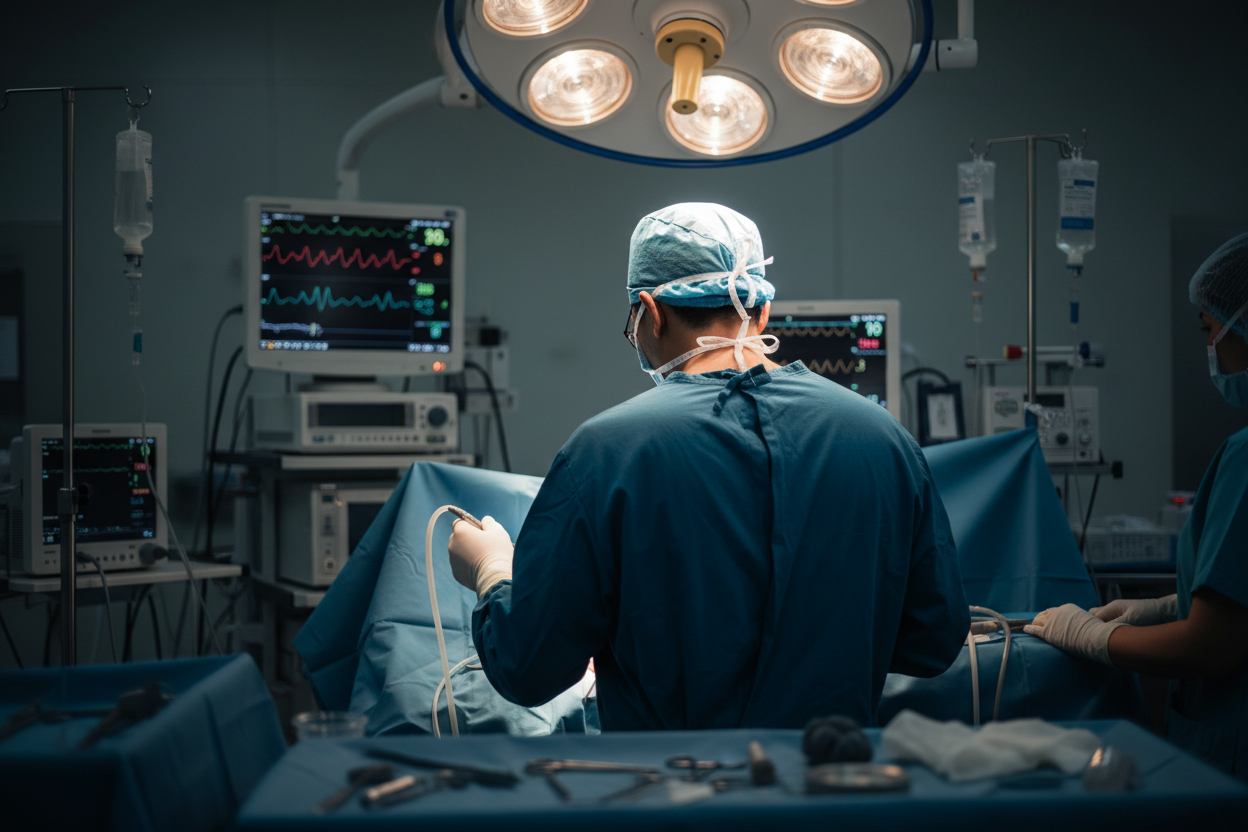
There is no movement in the classic sense in the operating room. Doctors and surgical teams often work for many hours in almost unchanged postures. Especially during open surgeries, minimally invasive procedures, or image-guided procedures, static stress situations arise that strain the entire musculoskeletal system.
In specialties such as vascular surgery, orthopedics, visceral surgery, radiology, or endoscopy, long operating times are added – often with the highest concentration and fine motor precision. The body itself becomes the stabilizing
element of medical work.
With increasing operating time, the physical strain increases, especially for:
- Lumbar spine (LWS) due to leaning forward over the operating table
- Cervicothoracic junction (neck-shoulder area) due to static head posture
- Paravertebral musculature due to continuous holding work
- Shoulder girdle musculature during precise instrument guidance
- Lower extremities due to long periods of standing in the operating room
These stresses not only affect the body, but also central performance parameters in the operating room: ability to concentrate,
sensorimotor control, and fine motor precision.

How Exoskeletons Support Doctors and Surgeons in the OR
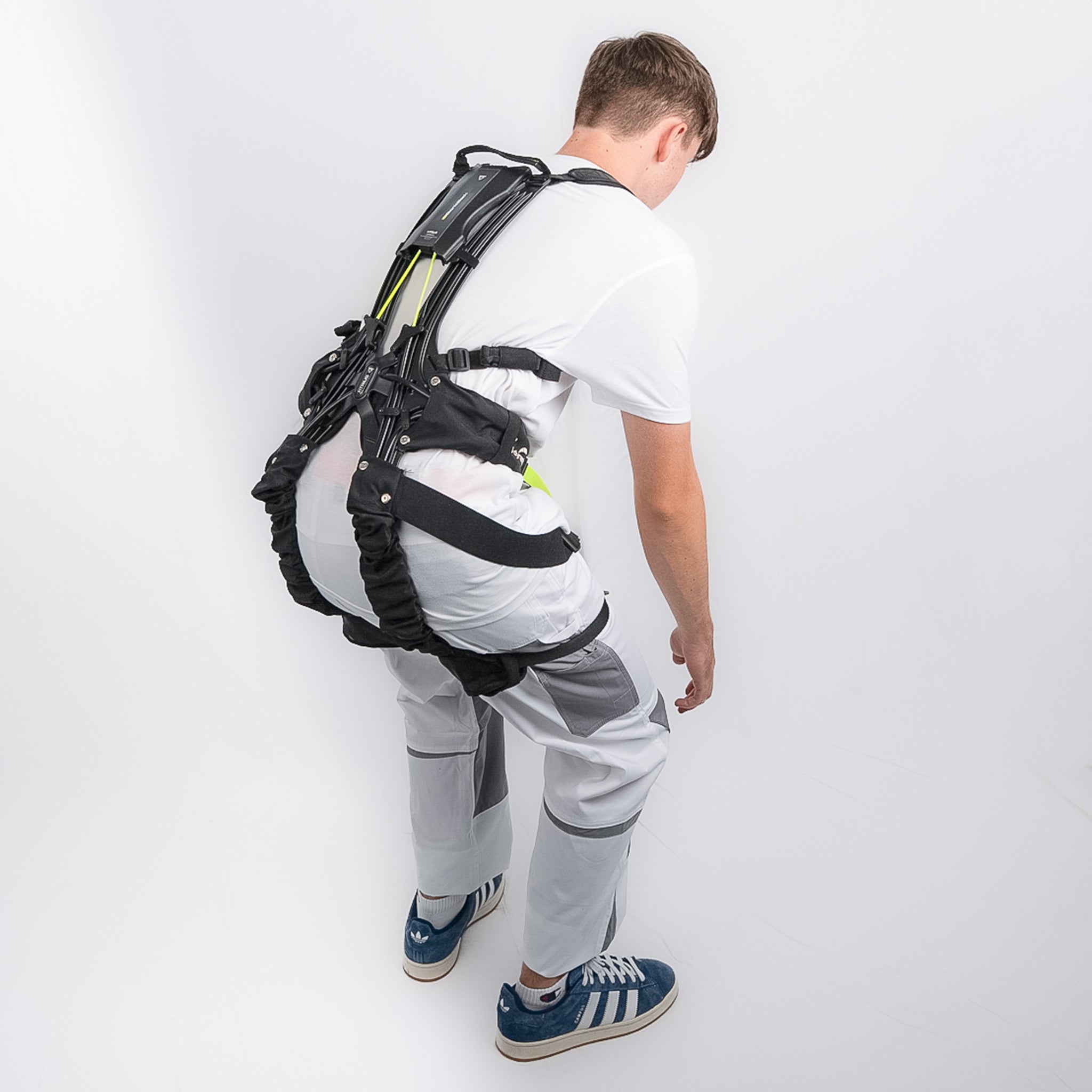
Exoskeletons are body-worn assistance systems that specifically redistribute biomechanical loads in the musculoskeletal system. They reduce static muscle work and support an upright and stabilized posture during prolonged procedures.
It is important to note: They do not interfere with the surgical workflow but solely support the physical aspect of the work.
This results in:
- Reduction of static muscle activity (especially back and shoulder extensor muscles)
- Relief of the paravertebral musculature in flexion-dominated surgical postures
- Reduction of axial load on the lumbar spine
- Reduction of continuous muscle tension in the shoulder-neck complex
- Stabilization of postural control during precise interventions
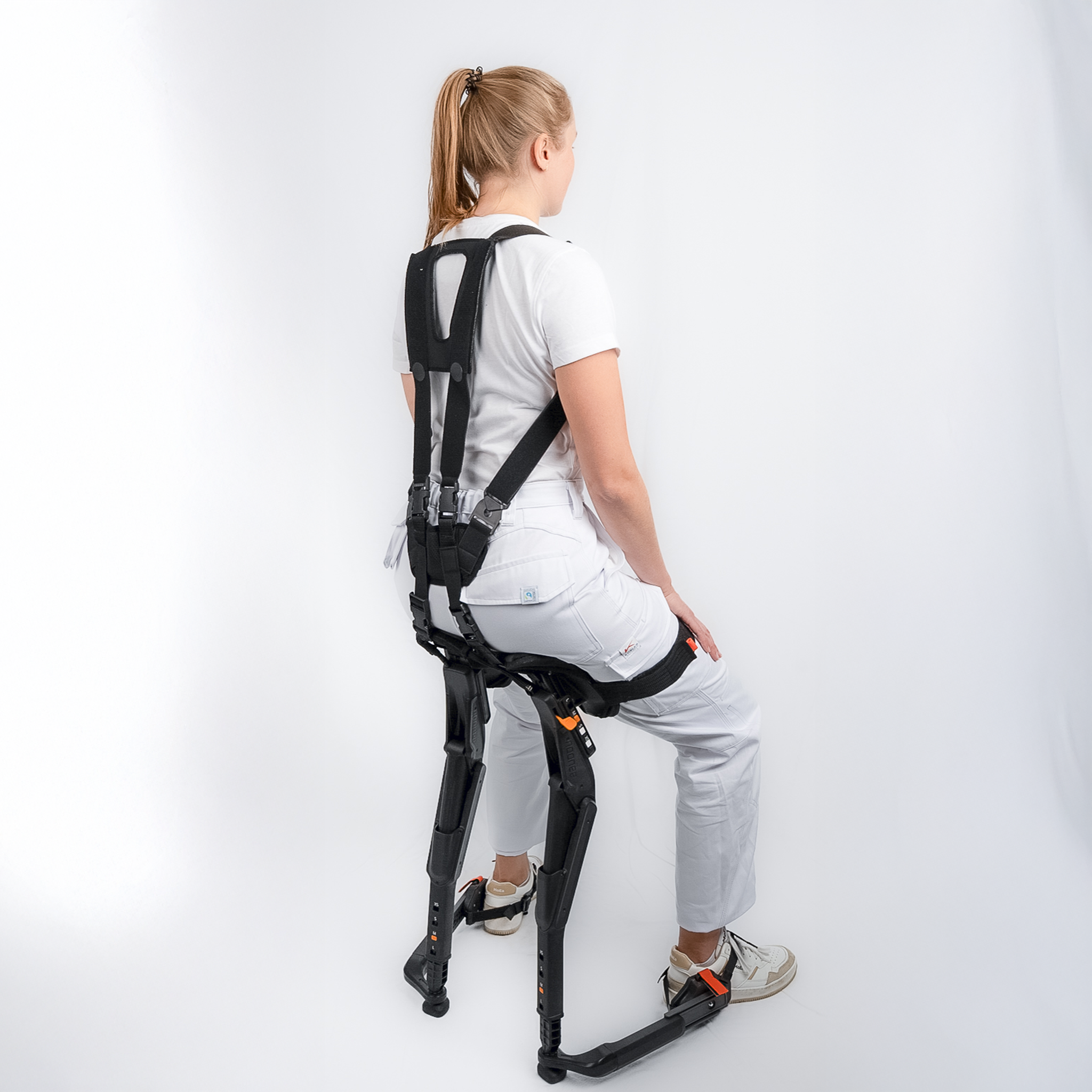
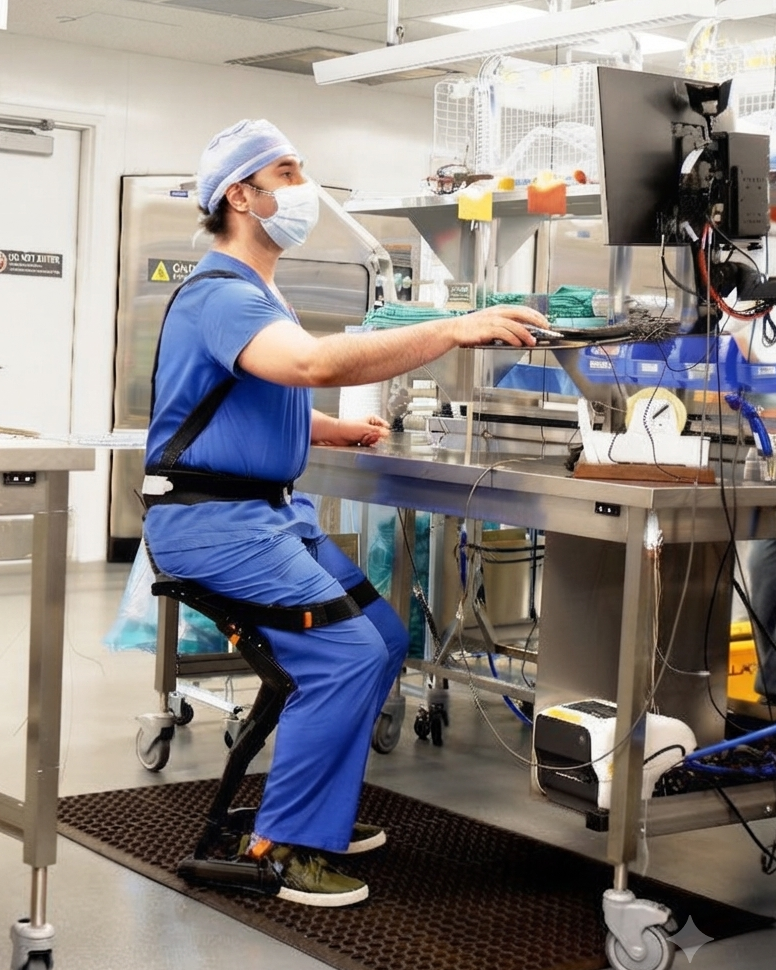
The goal is clear: ergonomic support without compromising surgical precision or freedom of movement. Especially for prolonged standing activities, solutions like the Chairless Chair can provide additional relief. Its chair-like support relieves legs, knees, and back while maintaining full freedom of movement and meeting the demands of daily surgical work.
Proven in practice
The Chairless Chair has also proven its worth in clinical practice. The adjacent video shows Prof. Dr. Kaisidis, Chief Physician of the Clinic for Shoulder Surgery at the Red Cross of the Frankfurt Red Cross Clinics, explaining why the Chairless Chair is a sensible ergonomic support for lengthy surgical procedures.
Further insights can be found on the Instagram and TikTok channels of @prof.dr.kaisidis
Reduction of Musculoskeletal Strain in the OR
Static holding work, particularly during surgery, leads to increased activation of the erector spinae muscles (M. erector spinae). This results in increasing fatigue and continuously rising muscular strain throughout the entire surgical procedure.
Depending on their design, exoskeletons can provide biomechanical relief in this context by:
- Reducing muscle activity in the autochthonous back muscles
- Decreasing compression and shear forces on the spine
- Relieving the lower extremities during prolonged standing
- Lowering the subjective perception of exertion during
surgeries
Especially during long-lasting procedures in visceral surgery, orthopedics, or neurosurgery, this can lead to a significantly more stable physical strain situation. By reducing static muscular work, exoskeletons can also help to delay fatigue processes.
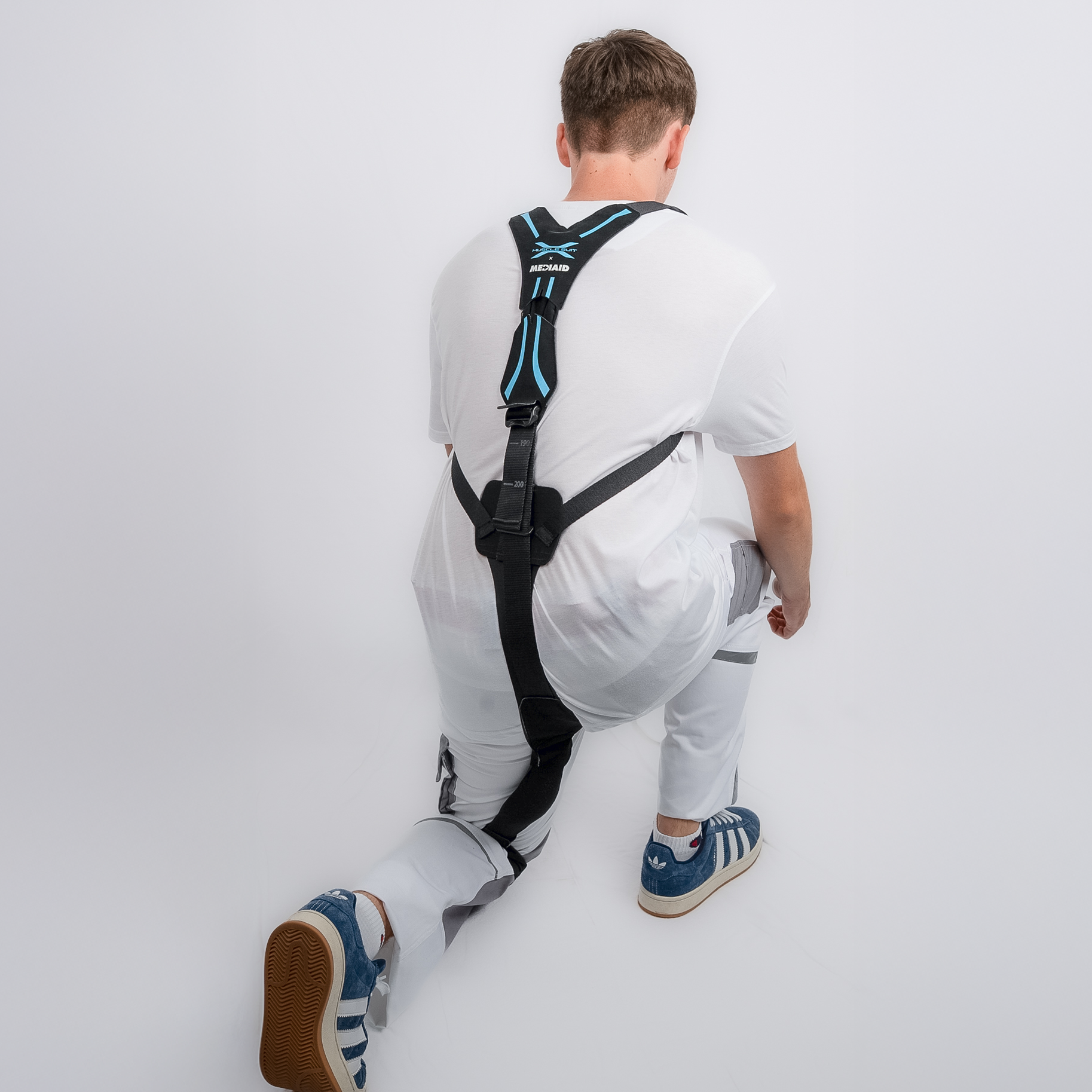
Developed for industrial everyday use
A stable posture is a fundamental prerequisite for precise work in the surgical field. Even minor muscular instabilities can affect fine motor skills.
Exoskeletons support postural stability through biomechanical relief and even load distribution.
This leads to:
- improved physical stability during long procedures
- more consistent postural control in the shoulder and torso area
- support for fine motor precision work in the surgical field
- reduced physical micro-fatigue during sensitive procedures
Testing Exoskeletons in the Operating Room
Every operating room and every medical specialty places different demands on ergonomics and physical resilience. Therefore, it is important to evaluate the most suitable solution under real conditions.
Would you like to learn how exoskeletons can support doctors and surgical teams during long procedures? Call us or contact us for a personal consultation. Together, we will discuss the possible applications in your clinical environment and show you which solution is suitable for your needs.
Of course, test phases are also possible so that you can experience the benefits of an exoskeleton directly in your daily work.